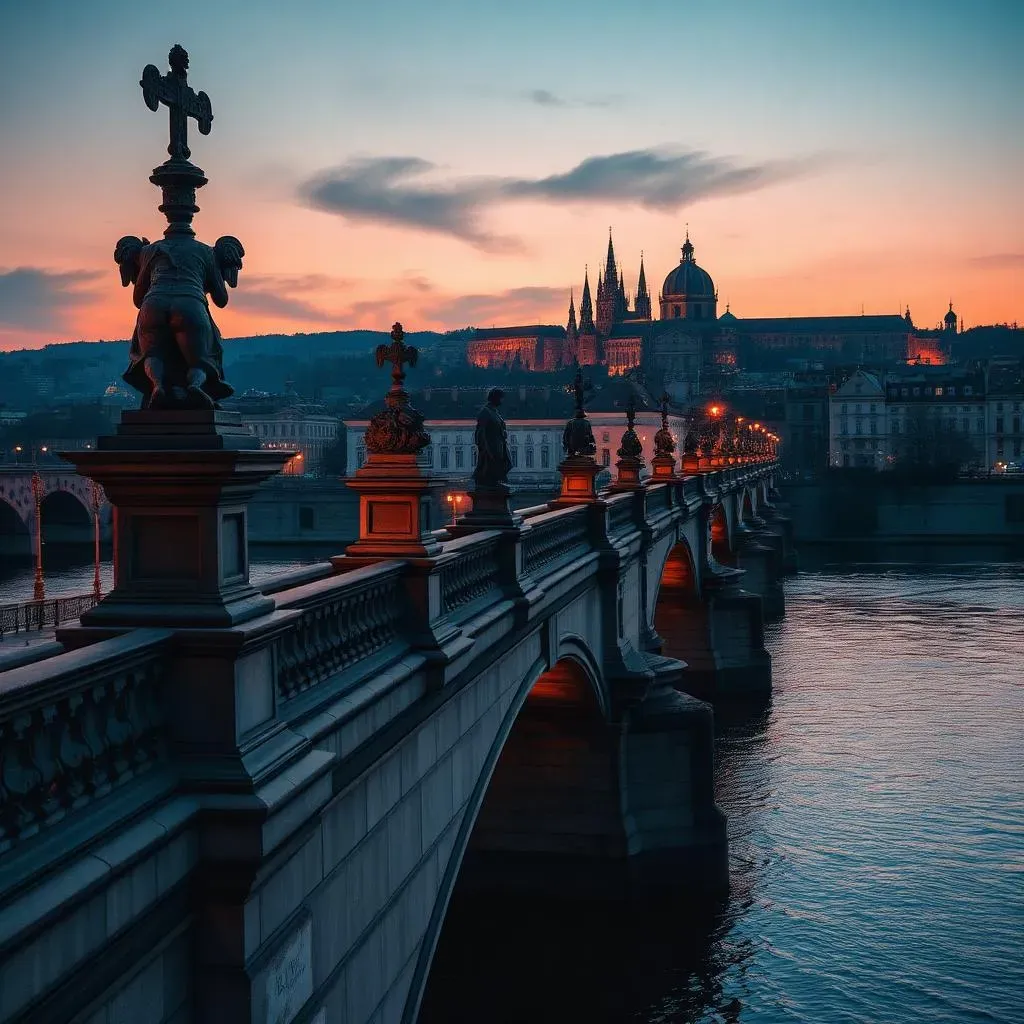
The best Prague attractions for 2026: Old Town Square, Charles Bridge, Prague Castle and Josefov — map, 3-day itinerary and practical tips for first-timers.
Prague is one of Europe's best long-weekend cities: prices are a third of Paris, the medieval architecture survived the world wars intact, and every major sight sits within walking distance of the Old Town. This guide covers 15 must-see attractions, lays out a three-day itinerary for first-timers, and tells you where to eat, where to stay, and how to avoid the usual tourist traps.
Why Prague is worth it in 2026
Prague came out of WWII virtually undamaged, so its Gothic, Baroque and Art Nouveau architecture is authentic — not reconstruction. The core has six areas: Staré Město (Old Town), Nové Město (New Town), Malá Strana (river side), Hradčany (castle hill), Josefov (Jewish Quarter) and Vyšehrad (a local favorite). They all fit in roughly 3 km² and you cover the ground on foot or by tram.
Price level: beer €2–3, lunch €8–12, city-center hotel €60–120/night, airport taxi €25. The currency is the Czech koruna (CZK) — euros are only accepted in a few tourist spots at bad rates.
Old Town Square & Astronomical Clock
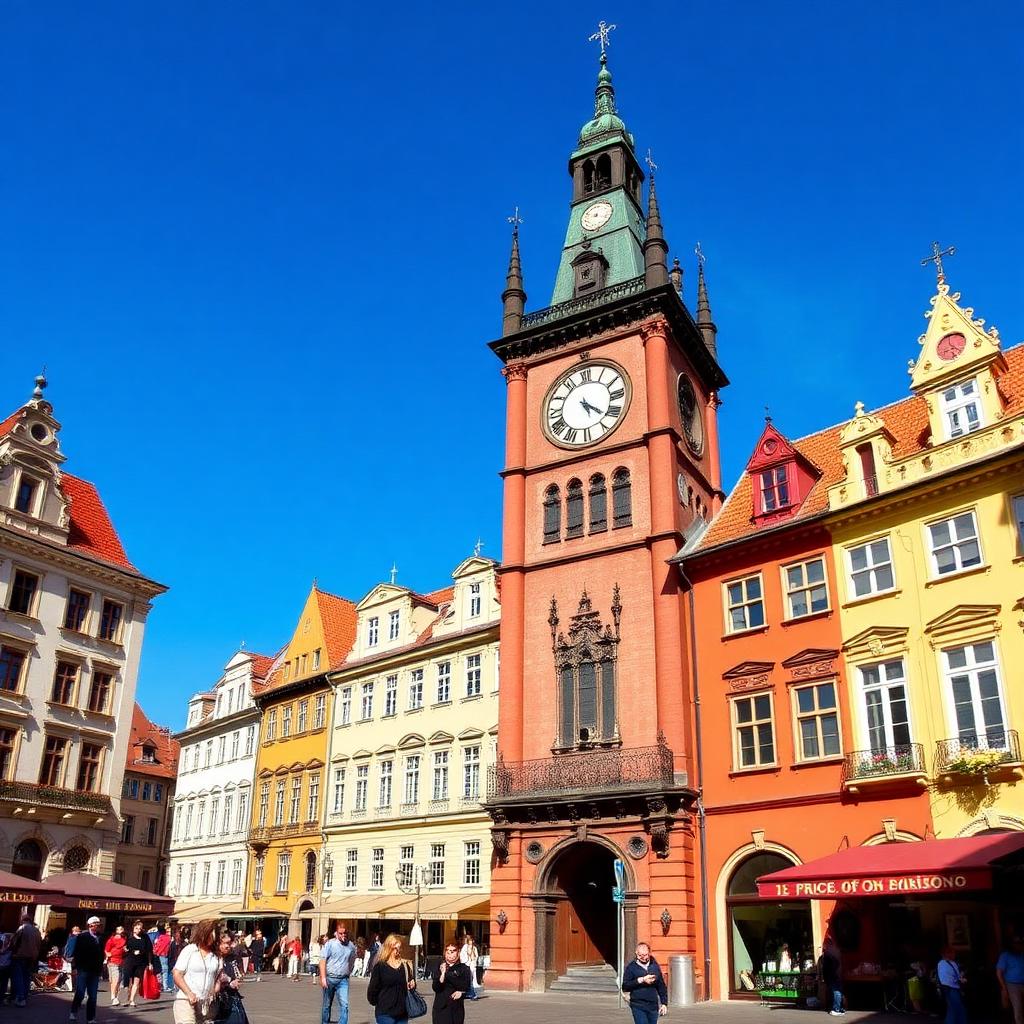
Staroměstské náměstí is Prague's heart: colorful houses, the Gothic Týn Church and the Astronomical Clock (Orloj) from 1410 — the oldest still-operating astronomical clock in the world. Every hour on the hour, 12 apostles march past its windows. The show is short (45 s) but free. Climb the clock tower (150 CZK / ~€6) for the best rooftop view — in December the square hosts one of Europe's best Christmas markets.
Tip: avoid the square between 11:00 and 15:00. The quietest hours are 08:00 and after sunset.
Charles Bridge and Malá Strana
Karlův most (1357) connects the Old Town to Malá Strana. Thirty Baroque statues line the 516-metre stone span. Cross at sunrise (05:00–06:00 in summer) — by day it holds thousands of tourists, street sellers and caricaturists. On the Malá Strana side you reach St Nicholas Church (Central Europe's finest Baroque interior) and the John Lennon Wall — Prague's most unofficial sight.
Malá Strana's narrow alleys, secret pubs and small gardens are Prague's most romantic quarter — it also holds Kampa Island, where giant panda sculptures sit by the river.
Prague Castle & St Vitus Cathedral
Pražský hrad is (per Guinness) the world's largest ancient castle complex — 70,000 m² covering the presidential palace, several palaces and St Vitus Cathedral (built 1344–1929). The stained-glass windows, including Alfons Mucha's Art Nouveau panel, are worth the visit. Buy the "Circuit B" ticket (250 CZK / ~€10) — it covers the cathedral, Old Royal Palace, St George's Basilica and the Golden Lane (tiny 16th-century craft cottages).
Go at 09:00 right on opening — the noon changing-of-the-guard brings the big tour groups. Walk back down Nerudova Street — Prague's most-photographed lane.
Josefov, Vyšehrad and hidden gems
Josefov (Jewish Quarter) is Europe's most moving memorial: six synagogues, of which the Pinkas Synagogue lists 77,297 names of Czech Jews murdered in the Holocaust hand-written on its walls, and the Old Jewish Cemetery (1439) — 12,000 gravestones piled in 12 layers on a narrow strip. Combined ticket 500 CZK (~€20).
Vyšehrad is the local favorite hilltop on the south side — fewer tourists, free river views and the cemetery of Czech greats (Dvořák, Smetana). Petřín Lookout Tower (1891, a small Eiffel replica) offers Prague's best 360° view — €4 funicular up.
Restaurants and beer culture
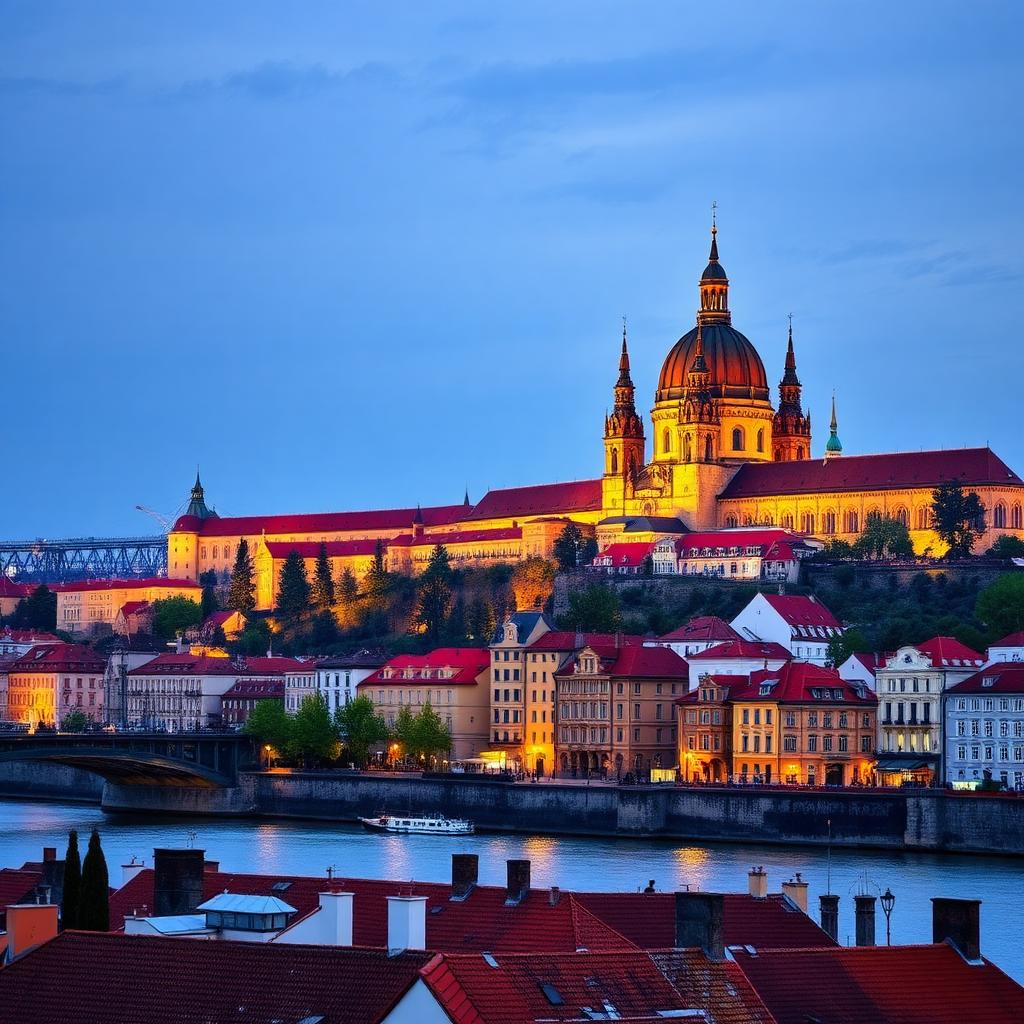
Czechs drink more beer per capita than anyone in the world (135 L/year) — and it costs less than water (35–60 CZK / €1.50–2.50 per half-liter). Classics: U Fleků (brewery since 1499, dark lager), Pivovarský Dům (experimental brews), U Zlatého Tygra (Havel's regular). Czech dishes: svíčková (roast beef in cream sauce), guláš with knedliky bread dumplings. Trdelník is a tourist invention — not traditional.
Avoid the restaurants on Old Town Square (2–3× overpriced). Walk 5 minutes to Vinohrady or Karlín where locals eat.
Practical tips
Transport: metro (lines A, B, C) and trams cover everything. 24 h ticket 120 CZK (~€5), 72 h 330 CZK (~€13). From the airport, Bus 119 → metro A. Avoid the yellow "AAA" street taxis — use Bolt or Uber. Money: never use street exchange kiosks (Change/Exchange) — pull cash from ČSOB or Komerční Banka ATMs. Safety: Prague is safe, but pickpockets work Charles Bridge, metro line A and Old Town Square. Keep your phone zipped away.
eSIM: an Airalo Europe eSIM works in Czechia with no roaming — you save €6–15/day vs. your home carrier. Travel insurance in place: see travel insurance guide 2026.
3-day Prague itinerary
Day 1 (Old Town): Old Town Square & Orloj at 09:00 → Josefov (2 h) → lunch in Vinohrady → Nové Město & Wenceslas Square → dinner at U Fleků.
Day 2 (Castle Hill): Charles Bridge at 06:00 → Malá Strana and St Nicholas Church → Prague Castle at 10:00 → lunch on Nerudova Street → Kampa Island and Lennon Wall → Petřín tower for sunset.
Day 3 (local side): Vyšehrad in the morning → day trip by train to Kutná Hora (bone chapel, 1 h by train) or Karlštejn Castle → dinner in Karlín.
Finding flights: Kiwi.com shows the cheapest direct routes from Helsinki (Ryanair, Wizz Air €60–150 return). See our cheap flights 2026 guide.
FAQ — Prague 2026
How many days in Prague? 2–3 days is enough for the core. 4–5 days lets you add day trips (Kutná Hora, Karlštejn, Český Krumlov).
When to visit Prague? May–June and September are best (18–24 °C, fewer tourists). December is magical for the Christmas markets but cold (-2 °C).
Is English spoken in Prague? Yes in tourist areas and hotels, moderately elsewhere. Younger people speak well, older generations rarely. A few Czech words ("Dobrý den" hello, "Děkuji" thanks) go a long way.
Is Prague more expensive than expected? No — baseline is 40 % cheaper than Helsinki. Only Old Town Square restaurants are overpriced.
Is the Prague Card worth it? Not for most. The card (~€65/2 days) only pays off if you hit 6+ museums. Individual tickets come out cheaper.