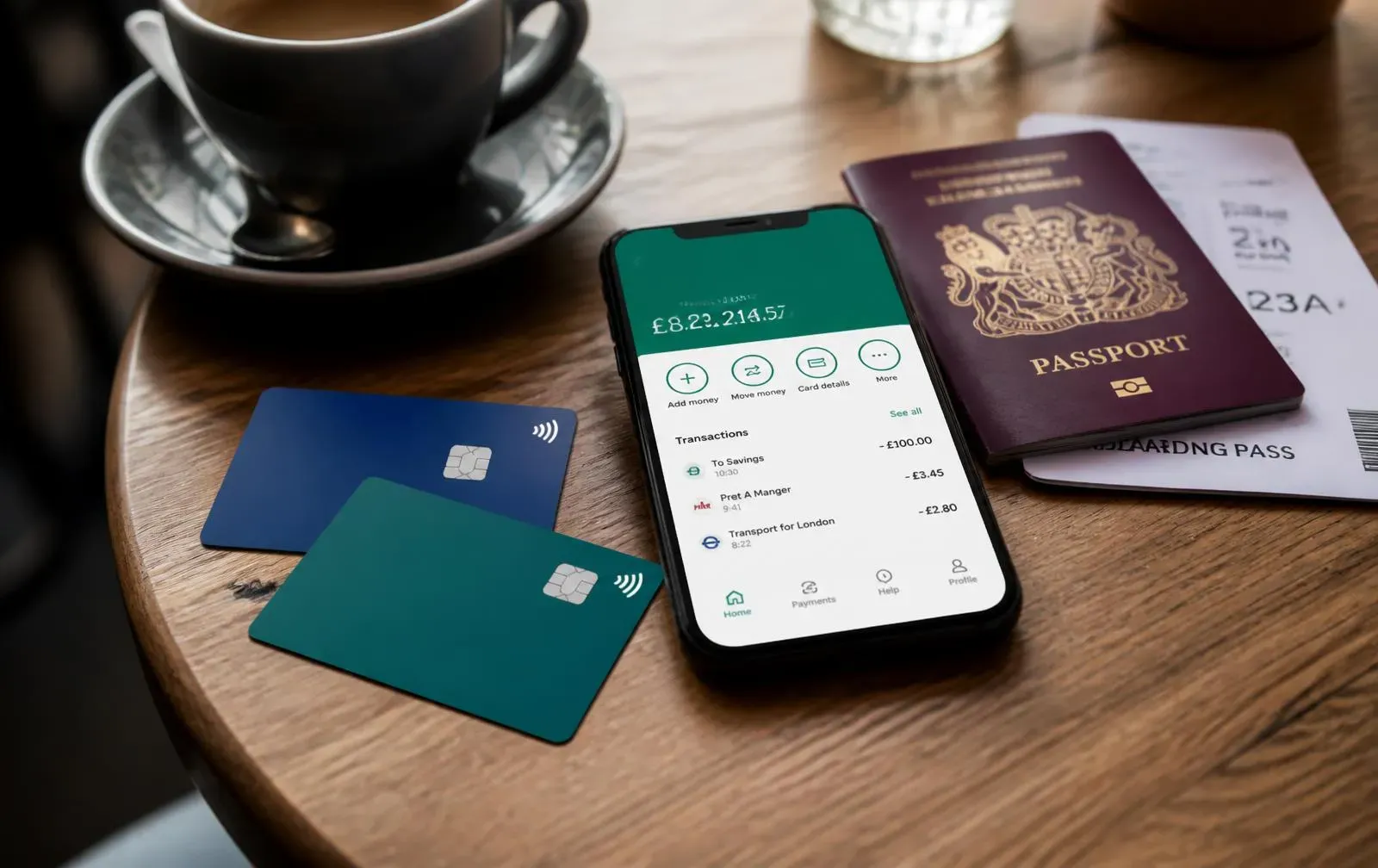
Revolut or Wise for travel in 2026? We compare exchange rates, withdrawal limits, card fees, app features and security — and explain which one to pick.
Paying abroad with a regular bank debit card typically costs 1.5–2.5 % in currency conversion margin plus €2–5 per cash withdrawal. On a two-week trip to Thailand that is easily €30–60 wasted. This is why almost every frequent traveller now carries either a Revolut or a Wise card. This guide compares them point by point: rates, fees, withdrawal limits, app features, security, and which one suits which kind of traveller.
The short answer
Wise is better if you want transparent and predictable costs, hold currencies for longer periods, or get paid and invoice in several currencies. Wise always uses the mid-market rate and charges a separate, visible percentage — including at weekends.
Revolut is better if you take short trips, value the app features (budgets, split bills, virtual cards, insurance add-ons) and can exchange currency on a weekday. The free Standard tier has a monthly exchange allowance, after which a fee applies, and weekend exchanges carry an extra margin.
Many experienced travellers carry both: one for spending, one for withdrawals — and two separate providers double as a backup if one card is lost or an account gets temporarily frozen.
Comparison table
| Feature | Revolut | Wise |
|---|---|---|
| Exchange rate | Interbank rate on weekdays, extra margin at weekends | Always the mid-market rate |
| Exchange fee | Free within the monthly allowance, then a percentage fee | Transparent fee of roughly 0.3–0.6 % depending on currency |
| Cash withdrawals | Free monthly allowance, then a percentage fee | Two small free withdrawals per month, then a fixed fee + percentage |
| Currency accounts | 25+ currencies | 40+ currencies with local account details |
| Physical card | Free or paid depending on plan | One-off fee of about €7 |
| Virtual cards | Yes, including single-use | Yes |
| Travel insurance | Included in paid plans | Not included |
| App extras | Budgets, savings pots, split bills, stocks | Clean multi-currency transfers |
| Best for | Short trips, everyday spending, group travel | Long trips, remote work, invoicing, holding currency |
Always check the current limits and prices on each provider's own pricing page before you travel — both update their terms a few times a year.
What the rates mean in practice
The difference sounds small, but it compounds. Example: you spend the equivalent of €2,000 in local currency during a trip.
- Nordic bank debit card at a 2 % margin: €40 in fees
- Revolut on a weekday within the free allowance: €0–5 in fees
- Wise at roughly 0.45 %: about €9 in fees
- Revolut at the weekend without exchanging in advance: about €15–25 in fees
The key lesson: exchange your currency in the app in advance, on a weekday — do not leave the conversion to the moment you pay on a Sunday evening. With Wise the gap is smaller because the rate is the same on any day.
A second rule applies to both: when a payment terminal asks whether to charge you in euros or in the local currency, always choose local currency. The merchant's euro option (DCC) hides a 3–7 % margin that wipes out the benefit of the card.
Cash withdrawals and ATMs
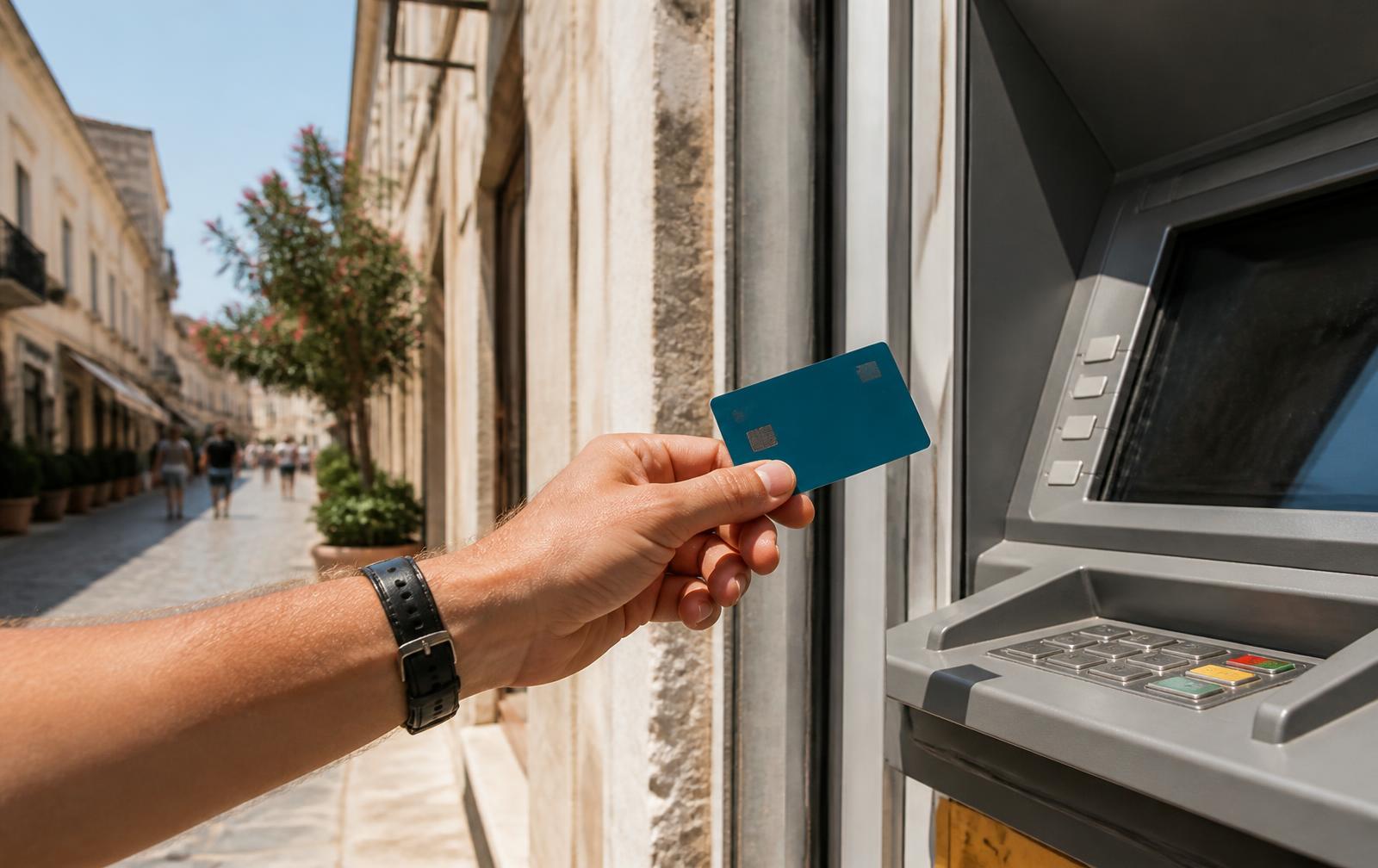
Both cards come with a monthly free-withdrawal allowance, after which withdrawals are charged. So the strategy is simple: withdraw rarely and in larger amounts.
Also watch the ATM's own fee. It is charged by the machine regardless of your card and can be €3–6 no matter how much you take out. The usual expensive machines are the yellow-and-blue Euronet units in tourist areas and airport arrival halls. Prefer a real bank's own ATM: bank-operated machines in Thailand, BBVA or CaixaBank in Spain, ČSOB or Komerční Banka in the Czech Republic.
If the ATM offers a "conversion to EUR" option, decline it and let your card do the conversion.
Security and backups
Both providers are licensed financial institutions and let you freeze the card from the app in seconds, get per-transaction notifications, hide the card number, and create virtual cards for online purchases. Practical rules for the road:
1. Carry two cards in two places — one in your wallet, one in the hotel safe.
2. Keep a small euro buffer in a traditional bank account in case an app asks for extra verification.
3. Turn on payment notifications — you spot misuse in minutes rather than on a statement a month later.
4. Use a virtual card for airlines, car rental companies and unfamiliar booking sites.
5. Save the support chat and your account details somewhere outside your phone before you leave.
Remember that the insurance bundled with a card is not a substitute for proper travel insurance. Read the travel insurance comparison 2026 before you rely on a card benefit alone.

Which one for which traveller?
A two-week beach holiday or a city weekend: Revolut is plenty. Exchange currency on a weekday before you leave, withdraw cash once and pay by card otherwise.
Backpacking across several countries (Southeast Asia or an Interrail trip): take both. There are many currencies, you need more cash, and a backup card is essential.
Remote work and digital nomad life: Wise. Local account details in euros, pounds and dollars make invoicing easy, and you can hold income in the currency it was paid in. See also the digital nomad guide.
Family or group trips: Revolut, because split bills and shared expense groups work right in the app.
A long trip to low-cost countries: either one, but plan your withdrawals. See the cheapest destinations 2026.
How to set the card up before you travel
1. Order the physical card 2–3 weeks before departure — delivery takes time, and a virtual card alone will not work at ATMs or car rental desks.
2. Do the ID verification and account opening calmly at home on a good connection.
3. Top up your travel budget and exchange the currency on a weekday.
4. Add the card to your phone wallet — paying with Apple Pay or Google Pay is safer than the physical card because the card number is never shared with the merchant.
5. Test the card at home with one purchase and one withdrawal before you leave.
6. Make sure the app works abroad: strong authentication needs a data connection. Activate an eSIM before departure if you are travelling outside the EU.
The most common mistakes
- Exchanging currency at the weekend. With Revolut it costs clearly more than on a weekday.
- Accepting the DCC charge. The euro option offered by a terminal is always more expensive than your card's own rate.
- Many small withdrawals. Every withdrawal can trigger the ATM's own fee.
- Travelling with a single card. If it is lost or the account is frozen for a review, you are left without money.
- Leaving the app tied to your home network. Without data you cannot confirm a payment or unfreeze a card.
- Trusting the card's insurance benefit. Card cover is limited and often excludes long trips and many sports.
FAQ — Revolut vs Wise 2026
Which one is cheaper? For small amounts on weekdays, Revolut is often cheaper. For larger amounts, at weekends and in less common currencies, Wise is more predictable and frequently cheaper.
Can I use both at the same time? Yes, and it is recommended. Two cards from two providers are the best protection against loss and temporary account freezes.
Do the cards work for hotel and car rental deposits? Hotels usually accept a debit card, but car rental companies almost always require a real credit card. Bring a separate credit card for that.
Should I still carry cash? Yes — €50–100 in cash is a sensible emergency reserve. Some countries and small vendors still run on cash only.
Is my money protected? Both providers operate under safeguarding rules for client funds, but the terms differ from traditional deposit protection. Do not keep your savings on a travel card — move only your travel budget.