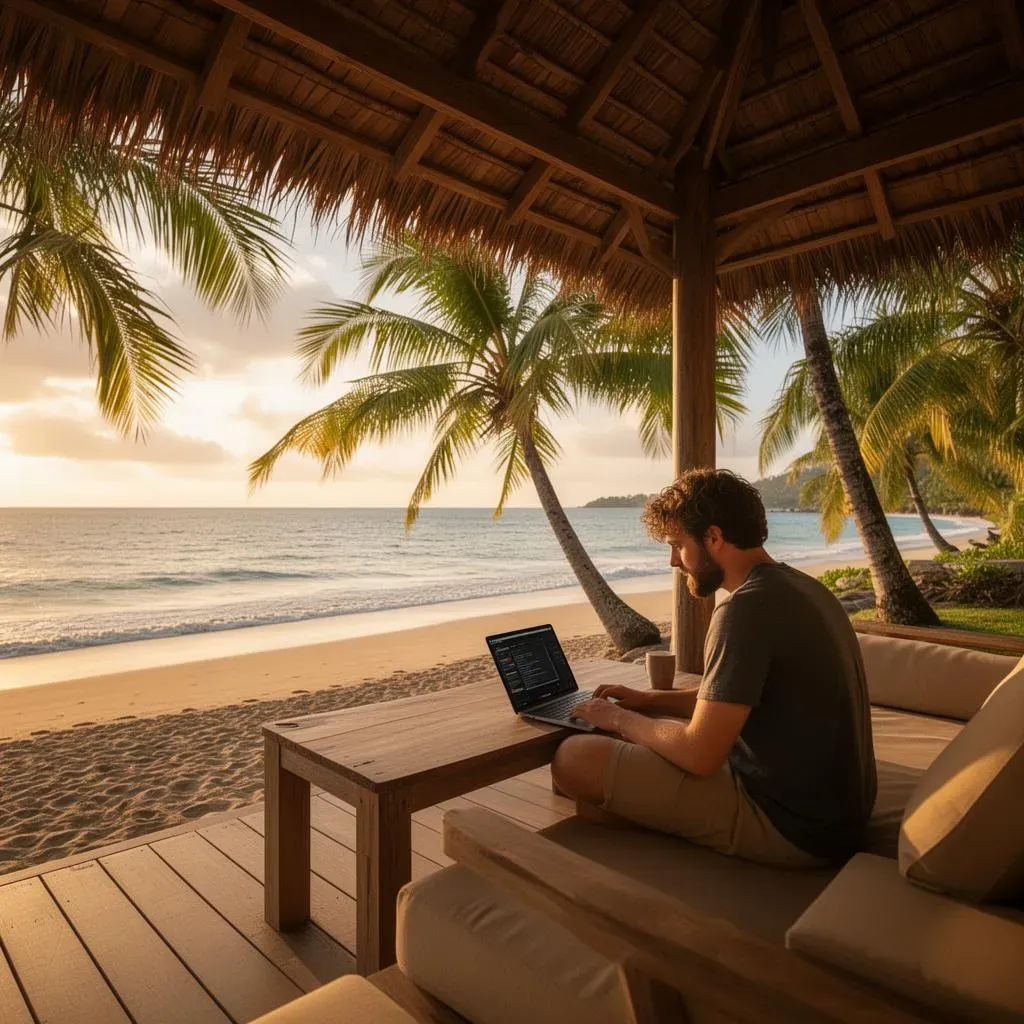
Working remotely from paradise sounds like a dream, but the reality requires planning. A practical guide to visas, internet, coworking and taxes.
The digital nomad lifestyle exploded during the pandemic, and in 2026 over 35 million people regularly work outside their home country. This is the first generation that can truly choose where it physically works — but freedom brings new challenges: visas, taxation, pensions, healthcare and loneliness.
Start with a short test
Don't end your lease and leave for half a year right away. First try a 2–4 week working trip to a destination with good infrastructure (Lisbon, Bali, Chiang Mai, Medellín, Mexico City). You'll see whether your motivation holds for solo work across time zones and whether your Wi-Fi really works for video calls.
Visas — the new nomad permits
More than 50 countries now offer a dedicated digital nomad visa allowing 6–24 months of stay on foreign income. Popular options: Portugal D8 (1 year + renewal), Spain DNV, Greece Digital Nomad Visa, Croatia, Estonia (3 months), Costa Rica, Brazil. All require proof of income (typically 2,500–4,000 EUR/month), health insurance and a clean criminal record. Processing times are 1–4 months.
As an EU citizen, you can stay in another EU country indefinitely, but after 90 days you must register with local authorities. In non-Schengen countries, follow the 90/180 rule carefully — illegal stays can result in entry bans.

Internet and workspaces
Don't trust accommodation Wi-Fi ads blindly. A Speedtest measurement before signing a longer rental is essential. A good nomad apartment: at least 50 Mbps download, backup power for outages, an ergonomic chair, and a reliable electricity grid. Also load an eSIM (Airalo, Holafly) as a backup connection — you can hotspot from your phone if the apartment Wi-Fi fails.
Coworking spaces are the backbone of social life. WeWork is global, but local operators like Outsite, Selina, Dojo Bali and Hubud often offer better atmosphere and community. Day passes 10–25 EUR, monthly memberships 100–300 EUR. Many host weekly events that are the best way to meet other nomads.
Taxes — don't ignore them
Taxation is the most complex part of nomad life. As a Finn, you're typically liable for tax in Finland if your home, family or core economic ties remain there. A continuous stay abroad over 6 months can lead to a change to limited tax liability — but the rules are complex and include an 'essential ties to Finland' assessment.
Avoid the common mistake: don't assume that 'if I don't stay in any country over 183 days, I won't pay tax anywhere'. Tax exemption always requires active taxation somewhere — authorities will ask about it later. Consult a Finnish tax advisor before a longer departure. A 200–500 EUR cost easily saves thousands later.

Health insurance and pension
The Kela card is not enough abroad. You need international insurance — SafetyWing Nomad Insurance (45 USD/month) is popular, as are Genki and IMG Global Medical. A regular travel insurance is not enough for trips over 90 days. Pension contributions: if you're self-employed, keep YEL paid actively — pension does not accrue automatically from abroad. As an employee, your contract decides.
Wellbeing — loneliness and burnout
Nomad life looks idyllic on Instagram, but constant moving wears you out. Over 60 % of nomads report loneliness, and burnout is common. Use these strategies: stay in one place for at least a month, join a coworking space to access community, keep routines (morning exercise, regular meals), and use weekly video calls with family.
Top destinations 2026
Lisbon (Europe, good infra), Madeira (digital nomad village), Tbilisi (Georgia, 1-year visa-free stay), Chiang Mai (Thailand, affordable), Bali (Canggu/Ubud), Medellín (Colombia, year-round spring weather), Mexico City. Compare price levels with our comparison tool and calculate a monthly budget with our trip cost calculator.
Finally: digital nomad life isn't for everyone. It demands self-discipline, organisational skills and the willingness to manage work independently. But if the basics are in place — steady income, remote work and health insurance — it can be one of the richest phases of life. Start with a short trial, learn from mistakes, then decide whether to continue longer.