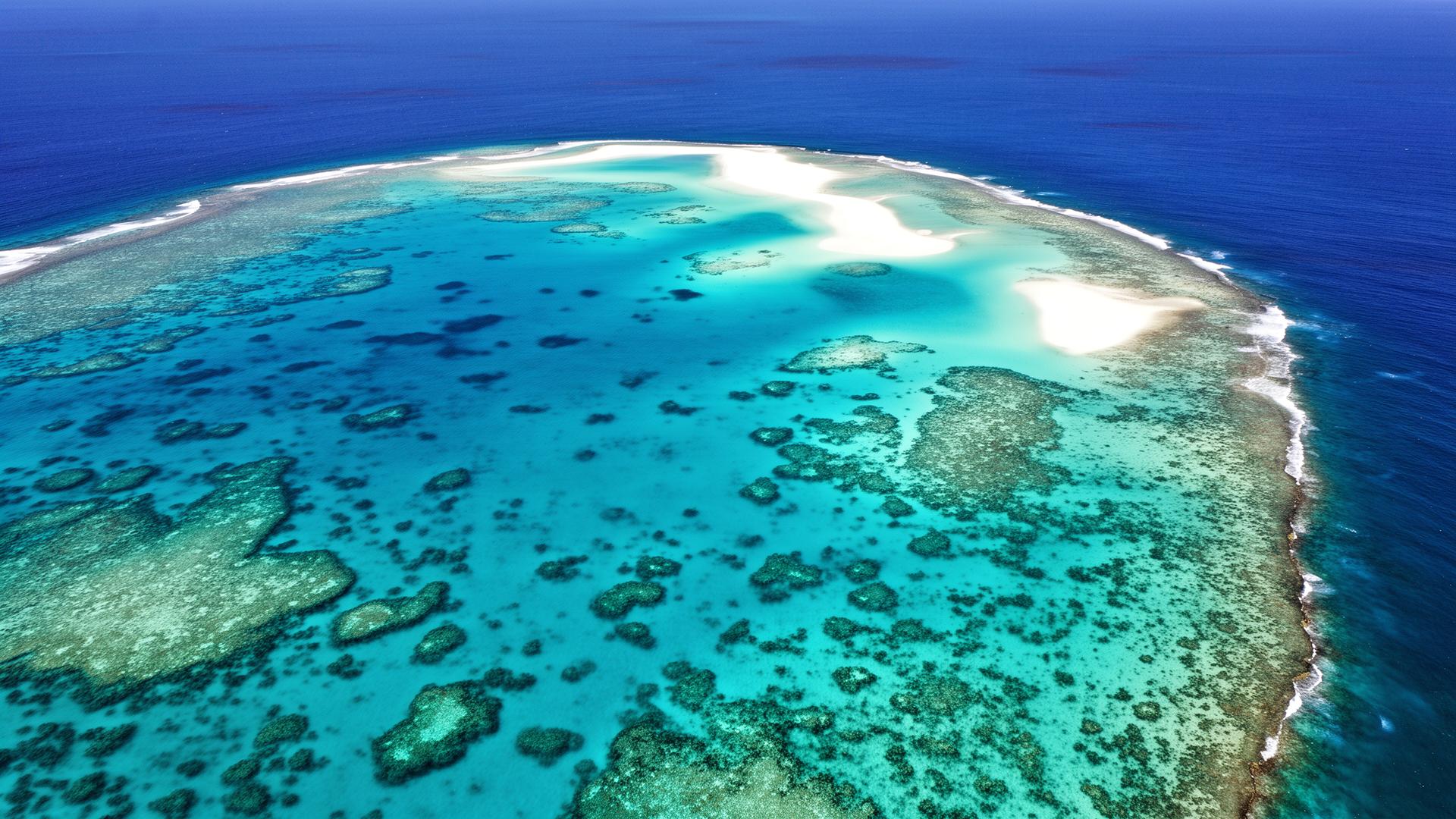
Oceania
Oceania is the world's most remote and naturally beautiful region — a vast oceanic area covering over 8.5 million square kilometers of the Pacific Ocean. The Australian outback is some of the planet's oldest land (over 3 billion years), and over 80% of the continent's fauna is endemic — koalas, kangaroos, and wombats are not found in the wild anywhere else. The Great Barrier Reef is the world's largest living structure: a 2,300 km long coral reef system visible from space. New Zealand is the adventure travel capital of the world, where bungee jumping and jetboating were invented. The country's two main islands offer everything from snowy peaks to tropical beaches over a 1,600 km distance. Fiji's 333 islands and French Polynesia's 118 atolls complete Oceania's picture as a tropical paradise.
Attractions
Great Barrier Reef, Australia
The world's largest coral reef system — for snorkeling and diving. The 2,300 km long reef consists of over 2,900 individual reefs and 900 islands. It is home to over 1,500 species of fish and 400 species of coral.
Milford Sound, New Zealand
A dramatic fjord landscape with rainforests and waterfalls. Rudyard Kipling called it the 'eighth wonder of the world'. The fjord's cliffs rise over 1,200 meters from the water's surface.
Sydney, Australia
The Opera House, Harbour Bridge, and Bondi Beach — an iconic city. The Opera House has over a million roof tiles and is one of the most famous buildings of the 20th century. Sydney is home to over 5 million people.
Queenstown, New Zealand
Adventure capital: bungee jumping, skydiving, and jetboating. The city is located on the shores of Lake Wakatipu at the foot of The Remarkables mountain range and is also a filming location for The Lord of the Rings movies.
Bora Bora, French Polynesia
A turquoise lagoon and luxurious overwater bungalows. The volcanic island is surrounded by a coral reef, and the shades of the lagoon vary from emerald to sapphire blue.
Uluru, Australia
A sacred red monolith in the heart of Australia — an Aboriginal heritage site. The 348-meter-high sandstone giant is over 500 million years old, and most of it is underground.
Weather & climate
Summer (Dec–Feb)
25–35°C
Warm and humid — perfect beach weather. Australia: heavy rains in the north.
Autumn (Mar–May)
18–28°C
Pleasant weather, fewer tourists, a great time to travel.
Winter (Jun–Aug)
10–20°C
Cooler — ski season in New Zealand. Dry season in the tropics.
Spring (Sep–Nov)
15–25°C
Blooming gardens and whale migration season.
Budget
| Category | 💰 Budget | 💎 Mid-range | 👑 Luxury |
|---|---|---|---|
| Accommodation / night | 25–50 € | 70–150 € | 200+ € |
| Food / day | 15–25 € | 30–60 € | 80+ € |
| Transport / day | 10–20 € | 25–50 € | 60+ € |
| Activities | 0–15 € | 25–60 € | 100+ € |
Travel tips
Rent a campervan
Australia and New Zealand are a campervaner's paradise — offering freedom and flexibility.
Protect yourself from the sun
UV radiation is extremely strong — always use SPF 50+ sunscreen.
Respect Aboriginal culture
Do not climb sacred sites — respect the wishes of indigenous peoples.
Book flights in advance
Island destinations require advance planning — flights and accommodations fill up quickly.
Compare destinations
Pick 2–3 destinations to compare safety, sociability, ease and budget side by side.
Solo traveller's guide
Safety
Social
Ease
Oceania is a safe and easy destination for solo travelers. Australia and New Zealand are particularly backpacker-friendly, and a Working Holiday visa allows for longer stays.
A Working Holiday visa is a great way to fund a longer trip in Australia or New Zealand.
The YHA hostel network is an excellent and safe option in both countries.
Renting a campervan gives you the freedom to explore at your own pace — Jucy and Wicked are popular choices.
New Zealand's Great Walks require advance booking — make it months in advance.
Call 000 (Australia) or 111 (New Zealand) in an emergency.