Passport validity, ETIAS and EES plus visas for popular destinations in 2026. A checklist, processing times and fees — sort your documents before booking flights.
Most cancelled trips are not caused by weather but by paperwork. The passport is about to expire, the destination demands six months of validity, or an electronic travel authorisation was never applied for. This guide explains which travel documents you need in 2026, how passport validity is calculated and what ETIAS and the EU's new border system mean in practice.
Passport validity — the three- and six-month rules
Your passport often has to be valid longer than the trip itself. The two most common rules:
- The six-month rule: the passport must be valid for at least six months from the date of entry or exit. Most countries in Asia, the Middle East and Africa require this.
- The three-month rule: third-country nationals entering the Schengen area need three months of validity beyond the planned date of departure.
Many countries also require the passport to be less than ten years old, even if the expiry date is later. Airlines check this at check-in — if the condition is not met you will not board, and travel insurance does not cover the resulting loss.
Rule of thumb: apply for a new passport once less than a year of validity remains. Processing times vary by season, so apply in spring before the summer rush.
Travelling within the EU
For EU and Schengen countries a valid passport or national ID card is enough. A driving licence is not a travel document anywhere. Children need their own document.
Two exceptions still apply: airlines may require a passport on certain routes, and the UK no longer accepts ID cards from most travellers. Take your passport if the trip includes a connection outside the EU.
Bring your European Health Insurance Card (EHIC) as well. It does not replace travel insurance, because it does not cover private hospitals, repatriation or cancellations — see the travel insurance comparison.
ETIAS and EES — what changes
Two EU systems are often confused:
- EES (Entry/Exit System) is an automated border system replacing passport stamping. It registers third-country nationals' entries and exits biometrically (facial image and fingerprints). EU citizens are not registered, but border queues can lengthen during the rollout.
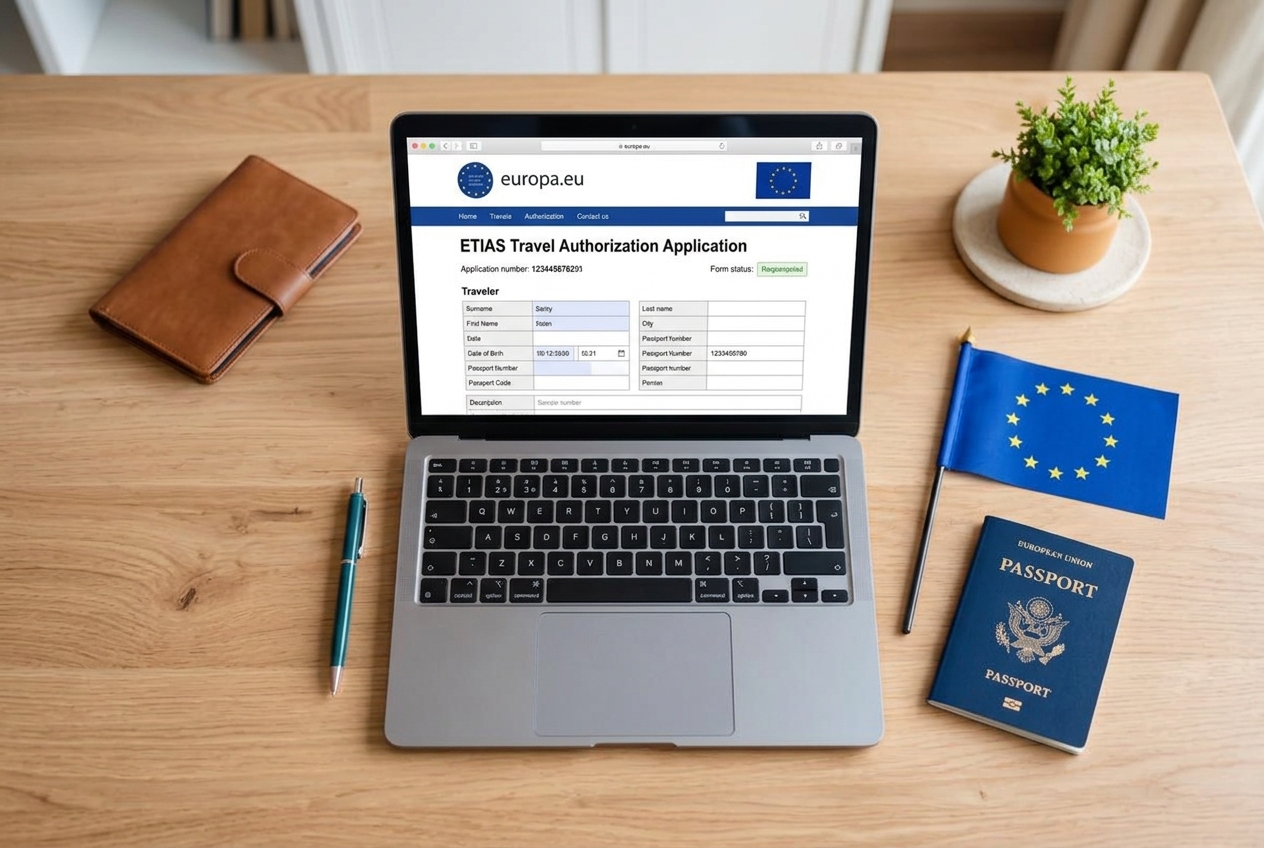
- ETIAS is an electronic travel authorisation required from visa-exempt third-country nationals entering the Schengen area. EU passport holders do not need ETIAS, but it applies to British, US and Canadian travellers arriving in the EU, for example.
For EU travellers the relevant direction is the opposite one: more and more countries require similar electronic permits on departure from Europe — for example the US ESTA and the UK ETA.
Always apply only on the official government website. Plenty of intermediaries online charge several times the price for the same form.
Visas for popular destinations
Indicative table for an EU passport holder on a short holiday. Always check current conditions with your foreign ministry's travel advice and the destination authority before booking.
| Destination | Permit | Fee (approx.) | Processing |
|---|---|---|---|
| United States | ESTA | 40 USD | Instant–72 h |
| United Kingdom | ETA | 16 GBP | Usually under 3 days |
| Thailand | Visa-free short stay | 0 € | — |
| Vietnam | E-visa | 25 USD | 3–5 working days |
| Cambodia | E-visa or visa on arrival | 30–36 USD | 3 working days |
| Türkiye | Visa-free short stay | 0 € | — |
| India | E-visa | 25–80 USD | 3–5 working days |
| Australia | eVisitor | 0 € | Instant–a few days |
| Canada | eTA | 7 CAD | Instant–72 h |
Two mistakes are common with electronic permits: the name is written differently from the passport, and the permit is applied for with an old passport number. Either one means the permit is invalid at check-in.
Before you book flights — a checklist
1. Check your passport expiry date and count the destination's requirement forward from it.
2. Check whether an electronic travel authorisation is needed and apply right after booking flights.
3. Scan your passport, insurance card and tickets and store them in the cloud and in an email to yourself.
4. Carry a paper copy of the passport data page, kept separately from the passport.
5. Check vaccination requirements — some countries in Africa and South America require a yellow fever certificate. See the health on the road guide.
6. Confirm insurance cover and emergency numbers — travel insurance comparison 2026.
7. Check cabin bag dimensions if your documents travel in hand luggage — carry-on size guide.
Always keep your passport in your hand luggage. Checked bags can miss the flight, and your passport with them.
If your passport is lost or stolen
1. Report it to the local police and ask for a written record. You need it both at the embassy and for your insurer.
2. Contact your country's embassy. If it has no representation, another EU member state's embassy can help.
3. Apply for an emergency travel document (ETD) to get home. It is issued for a single journey.
4. Notify your insurer and keep every receipt for new tickets and accommodation.
5. Freeze your cards in the app and use a backup card from a different provider — which is why two cards from two providers should always be kept in different places (Revolut vs Wise).
If a document problem delays or cancels your flight, check your compensation rights — on long EU flights, AirHelp can handle the claim.
FAQ — passports, ETIAS and visas
How long must a passport be valid? The most common requirement is six months from the date of entry. Within the EU a valid passport or ID card is enough.
Do EU citizens need ETIAS? No. ETIAS applies to visa-exempt third-country nationals entering the Schengen area.
What is the difference between ETIAS and a visa? ETIAS is a light electronic pre-authorisation; a visa is an actual entry permit, often applied for at an embassy and costing more.
Can I travel to the UK with an ID card? In most cases no. Take your passport.
How fast can I get a passport? Processing times vary by season, and urgent passports are issued for an extra fee. Apply well ahead, especially in spring.
Is a photo of my passport enough? Not as a travel document, but it speeds things up if the original is lost.
Does a child need their own passport? Yes. Children can no longer travel on a parent's passport endorsement.