Written by Matkustelu.fi
Researched Updated 21.9.2026
Plan a 2–3 day Stockholm city break from Finland with a practical itinerary, key sights, neighbourhoods, prices, public transport and archipelago tips.
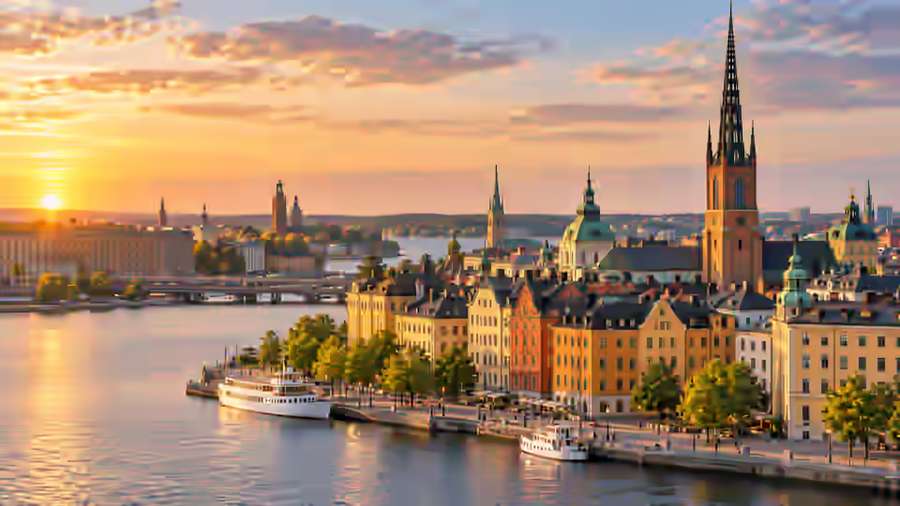
Stockholm is an easy city break from Finland, but it rewards more time than Tallinn. By ferry, the journey itself becomes part of the trip; by air, Stockholm also works as a shorter weekend. The centre spreads across islands, so the strongest itinerary combines the history of Gamla Stan, the museums of Djurgården, Södermalm's neighbourhood feel and at least one stretch by the water.
Three days is a good first-trip length: day one in and around the Old Town, day two on Djurgården, and day three in Södermalm or the archipelago. Stockholm works year-round, but summer shows its biggest advantage most clearly — water, long evenings and access to the islands.
Quick answer: what should you see in Stockholm?
Prioritise these on a first visit:
1. Gamla Stan and the blocks around the Royal Palace
2. The Vasa Museum on Djurgården
3. Södermalm and viewpoints around Mariaberget
4. one longer walk or ferry ride by the water
5. at least one unhurried fika
With only one day, focus on Gamla Stan and Djurgården. With two, add Södermalm. A third day gives you room for the archipelago, Fotografiska, Skansen or another major museum.
From Finland to Stockholm: ferry or flight?
Visit Stockholm lists Tallink Silja Line and Viking Line among the major Baltic ferry operators and notes that Stockholm's harbours are centrally located. The advantage of travelling by sea is that the journey becomes a mini-cruise and you avoid most airport logistics.
Flying is better when your priority is maximum time in the city. The real door-to-door difference depends on the airport, transfer and departure time rather than the flight duration alone.
If you travel by ferry, check your terminal and onward transport before departure. The approach through the archipelago is part of the experience: Visit Stockholm describes the Stockholm archipelago as a network of around 30,000 islands.
Read our cruise guide before booking a Baltic sailing.
A practical 3-day Stockholm itinerary
| Day | Morning | Afternoon | Evening |
|---|---|---|---|
| 1 | Gamla Stan | Royal Palace / Nobel Prize Museum | Södermalm |
| 2 | Vasa Museum | Djurgården / Skansen | Östermalm or Norrmalm |
| 3 | Archipelago or Fotografiska | Neighbourhood walk | Fika and final dinner |
Day 1: Gamla Stan and Södermalm
Start early in Gamla Stan. Stockholm's oldest district developed in the Middle Ages, while much of the current built fabric dates from the 16th and 17th centuries. Leave Västerlånggatan for the side streets, visit Stortorget and choose between the Royal Palace, Nobel Prize Museum or the Royal Armoury.
In the afternoon, cross towards Slussen and continue into Södermalm. Monteliusvägen and the Mariaberget area give classic views back towards the Old Town.
Day 2: Djurgården and Vasa
Give the morning to the Vasa Museum. More than 98 percent of the 17th-century ship is original. Vasa sank on its maiden voyage in 1628 and was raised in 1961.
Combine the museum with a walk on Djurgården. Families may prefer Skansen next, while pop-culture travellers can choose ABBA The Museum.
Day 3: archipelago or modern Stockholm
In good weather, choose an archipelago trip. Even city ferries give a taste of Stockholm from the water, while a fuller island trip needs several hours. In poor weather, Fotografiska, Nationalmuseum or a slower Södermalm day is a strong alternative.
Gamla Stan — historic Stockholm
Gamla Stan is more than one shopping street. Visit Stockholm recommends leaving Västerlånggatan and Österlånggatan for the narrower side lanes where the medieval layout is easier to appreciate.
The main stops are Stortorget, Stockholm Cathedral, the Royal Palace and Nobel Prize Museum. If you do not want a museum-heavy first day, simply walking through Gamla Stan and Riddarholmen gives a strong introduction to the city.
The Old Town is calmer in the morning than around midday. It also works well for dinner, although better value is often found away from the most tourist-heavy streets.
Djurgården and the Vasa Museum
Djurgården gathers many of Stockholm's best-known attractions in one area. The Vasa Museum is the clearest first choice: the 69-metre warship is unusually well preserved and the exhibitions give context to both the ship and 17th-century Stockholm.
Other options include Skansen, ABBA The Museum and the Nordic Museum. Trying to do all of them in one day usually makes the visit worse. Pick one or two priorities and leave room for walking on Djurgården.
A museum-heavy day is also useful in rain, so you can swap day two with your archipelago day depending on the forecast.
Södermalm, fika and neighbourhoods
Södermalm shows a less monumental and more everyday side of Stockholm. SoFo has small shops, cafés and restaurants, while the Mariaberget area is better for views and slower walks.
Treat fika as a proper break rather than another item on a checklist: coffee, a cinnamon bun and half an hour without an itinerary fit naturally into a long walking day.
Östermalm feels more polished and traditional, while Norrmalm is practical for shopping and transport. Choose your hotel based on whether you want atmosphere or easy connections.
Public transport and SL tickets
SL runs Stockholm's metro, buses, commuter trains, trams and some ferry lines. In June 2026, a 75-minute single ticket cost 43 SEK. Tickets can be bought in the SL app or with contactless payment at gates and on buses; cash is not accepted on buses.
Central Stockholm is walkable, but the city's scale makes public transport much more useful than in Tallinn. If you are crossing several districts in one day, compare the current 24-hour and 72-hour ticket prices before travel.
The metro is also part of the sightseeing experience: many stations are known for public art, so the journey underground can be interesting in its own right.
Prices and budget
Stockholm is an expensive city even by Finnish standards. The biggest savings usually come from accommodation and transport choices rather than trying to optimise every coffee.
| Style | Approx. per person/day | Typical approach |
|---|---|---|
| Budget | about €70–110 | hostel/simple room, supermarket lunch, walking |
| Mid-range | about €130–210 | central hotel, restaurants, museum |
| Comfort | €250+ | better hotel, taxis, several paid attractions |
Treat the ferry fare separately because cabin type, weekday and season can change the total dramatically. Accommodation is often the best place to save by booking early or staying one metro stop outside the most expensive central blocks.
For broader booking strategy, see our cheap flights guide.
Where to stay in Stockholm
Norrmalm: the easiest base for a first visit. Central Station, the airport train and several metro lines are close.
Gamla Stan: atmospheric but often expensive. Choose it if you want the Old Town literally outside your door.
Södermalm: good for restaurants, cafés and evenings. Often the best fit if neighbourhood life matters as much as major sights.
Östermalm: quieter, polished and usually expensive, with easy access to Djurgården.
When comparing hotels, check the nearest metro station. In Stockholm, 500 metres closer to good transport can matter more than 500 metres closer to Gamla Stan.
Best time to visit Stockholm
May to September: best for the archipelago, parks and long evenings. Summer is also the most popular and often most expensive period.
October and November: cooler but good for museums and food-focused trips. Expect wind and rain.
December: attractive for seasonal lights and atmosphere, but daylight is short.
January to March: a quieter city break where museums, cafés and restaurants become more important. Snow and cold vary from year to year.
If the archipelago is your main reason for visiting, choose summer. If Vasa, Fotografiska and food are the priority, season matters less.
Food, fika and where to eat
Stockholm can get expensive quickly if every meal is in the most tourist-heavy blocks. At lunch, weekday dagens rätt specials can be useful value, while dinner is often better once you move away from Gamla Stan's busiest streets towards Södermalm, Vasastan or other residential areas.
Östermalms Saluhall is a good place to explore Swedish ingredients and classics, although it is not a budget stop. Södermalm is stronger for modern restaurants and relaxed bars. For fika, do not over-optimise the "best" café — the important part is leaving time for it.
Try a cinnamon or cardamom bun, seasonal fish dishes and modern Nordic cooking. Swedish meatballs are the obvious visitor classic, but Stockholm's food scene is much broader than a single traditional dish.
Over three days, a good pattern is one planned dinner, one market-hall or casual lunch, and the rest based on whichever neighbourhood you are exploring.
The Stockholm archipelago in practice
The archipelago is one of Stockholm's biggest differences from a standard city break. A full island day is not a good use of time, though, if you only have a day and a half in the city.
On a short trip, you can still get strong water views from city ferries and the routes around Djurgården. With three or four days, half a day or a full day in the outer archipelago becomes much more realistic.
Summer brings the broadest ferry schedules and the longest daylight. In spring, autumn and winter, services can be less frequent, so check both the outbound and return timetable before leaving. Avoid building tight connections between island ferries.
If the sea is the main theme of your trip, consider travelling from Finland by ferry and doing the archipelago on a different day so the two experiences do not feel repetitive.
Stockholm with children
Stockholm is a strong family destination, but the number of museums makes it easy to overschedule. On Djurgården, the Vasa Museum, Skansen and other attractions sit close together, but two major stops in one day are enough for most families.
Public transport keeps transfers easy, and ferries make moving around more interesting for children. Hotel location matters a lot: a convenient metro connection often reduces more stress at the end of the day than a slightly cheaper room further out.
Keep one strong indoor attraction for bad weather and a park or ferry ride for a good-weather day. Three days is often better than two for families because every day does not need to start early and end late.
What should you book in advance?
Advance planning matters more in Stockholm than in Tallinn. Book early for:
- ferry or flights on popular weekends
- accommodation in summer or during major events
- your most important museum if timed entry is in use
- a popular Friday or Saturday restaurant
- a specific archipelago boat or island if that is central to the trip.
Ordinary SL public transport does not need reservations. It is also unnecessary to lock every museum ticket in advance if you want to stay flexible around the weather.
A good Stockholm plan leaves one half-day without a fixed schedule. The city is best when you can change course between metro, ferry and walking without feeling rushed.
Tallinn or Stockholm?
Tallinn is more compact and faster for a short trip from Helsinki. The centre works almost entirely on foot and two days cover a lot.
Stockholm is larger and more varied. Museums, the archipelago and distinct neighbourhoods easily fill three days, but the typical budget is also higher.
Compare the options in our Tallinn travel guide 2027 and Nordic destinations guide.
Practical checklist
- Allow at least two hours for the Vasa Museum.
- Check your ferry terminal and city transfer before departure.
- Download the SL app if you expect to use public transport often.
- Expect card payment almost everywhere; Sweden is highly cash-light.
- Do not try to visit every Djurgården museum in one day.
- In summer, reserve half a day or a full day for the archipelago.
- In winter, keep indoor sights in the plan and dress in layers.
- Check cover before travel in our travel insurance comparison.
Read next
Continue with the Nordic destinations guide, cruise guide, packing list or compare a shorter Baltic city break in our Tallinn guide.
Written by Matkustelu.fi
Researched Published 21.9.2026
The Matkustelu.fi editorial team curates travel information and planning tips. Always verify changing rules, prices and timetables with the original sources.