Written by Matkustelu.fi
Updated 29.8.2026
Thailand guide 2026: Bangkok's attractions plus the islands of Koh Samui, Koh Phangan, Koh Tao and Koh Chang — prices, routes and tips.
Thailand is one of Southeast Asia's most popular travel destinations, and for good reason. The country offers an incredibly diverse combination of tropical beaches, historic temples, bustling cities, and peaceful countryside — all at affordable prices. In this guide, we focus on the two most important themes: Bangkok and the most popular islands.
1. Bangkok — the gateway to Thailand
Bangkok is the first stop for most travellers, and the city deserves at least 2–3 full days. It is a chaotic but fascinating mix of modern and traditional: gilded temples rise between skyscrapers, and street food stalls operate next to Michelin-starred restaurants.
Top attractions: The Grand Palace and Wat Phra Kaew (Temple of the Emerald Buddha) are Thailand's most sacred sites — dress modestly, covering shoulders and knees. Wat Pho's 46-meter reclining Buddha and Wat Arun, the Temple of Dawn, across the Chao Phraya river are must-sees. Visit temples in the morning before the heat and crowds set in.
Neighbourhoods: Sukhumvit is the modern shopping and nightlife district with excellent hotel options. Siam is the central shopping quarter. Khao San Road is the legendary backpacker hub. The Old Town (Rattanakosin) holds the historic attractions, and Silom is the business district with the green oasis of Lumphini Park.
Getting around: The BTS skytrain and MRT metro are the fastest ways to beat the traffic. The Chao Phraya river boats are both cheap and scenic. Tuk-tuks are worth the experience, but always agree on the price in advance. The Grab app works reliably like a taxi service.
Street food: Bangkok's street food is world-famous. Yaowarat (Chinatown) offers the best street food experiences in the evenings — try pad thai, som tam (papaya salad), massaman curry, and mango sticky rice for dessert. Read more in our street food guide. Day trips: The ancient ruins of Ayutthaya (about 1.5 hours by train) and the Damnoen Saduak floating market are the most popular day trips from Bangkok.
2. Koh Samui — the most versatile resort island
Koh Samui is the largest and most developed island in the Gulf of Thailand, reachable by direct flights from Bangkok or by ferry from Surat Thani. The island is perfect for first-timers: it has an international airport, a good hospital, shopping malls, and restaurants for every taste.
Chaweng is the busiest beach area with bars and restaurants, while Lamai offers a slightly quieter atmosphere. Those seeking bohemian charm head to Fisherman's Village in Bophut, whose Friday walking-street market is the island's best market experience. Maenam and Lipa Noi are the picks for families and peace-seekers. Attractions: the 12-meter Big Buddha, the Na Muang waterfalls, and the Hin Ta & Hin Yai rock formations.
3. Koh Phangan — Full Moon Party and yoga retreats
Koh Phangan is famous worldwide above all for the Full Moon Party, the beach festival held at Haad Rin every full moon that draws thousands of partygoers. But the island is much more: its northern and eastern beaches (such as Thong Nai Pan and Bottle Beach) rank among Thailand's most tranquil and beautiful.
In recent years, Koh Phangan has also become a hub for yoga and wellness tourism — the island hosts dozens of yoga schools and detox centers. Practical tips: Phangan is reached by ferry from Samui (30 min) or Surat Thani. During party weeks, book accommodation well in advance; from other beaches you can reach Haad Rin at night by songthaew taxi.
4. Koh Tao — a diver's paradise
Koh Tao is one of the most popular places in the world to learn scuba diving — more PADI and SSI certifications are issued here each year than almost anywhere else. An Open Water Diver course costs around 300–350 €, among the cheapest in the world, and accommodation is often included.
The underwater life is rich: at the Chumphon Pinnacle and Sail Rock dive sites you can see reef sharks, turtles, and regularly even whale sharks. Tip for Finnish travellers: the island is home to Koh Tao Divers, a Finnish-run dive centre offering courses and guided dives in Finnish — a real relief when you want safety briefings in your own language.
Snorkelers are well served too: Shark Bay, Aow Leuk, and the Japanese Gardens are easy snorkeling spots straight from the beach. Koh Tao is also part of the Banana Pancake Trail and is reached by ferry from Koh Samui or Chumphon. The vibe is laid-back — evenings on the beach fill with bonfires and fire shows.
5. Koh Chang — lush and less crowded
Koh Chang (Elephant Island) is Thailand's second-largest island, located in the east near the Cambodian border — about a 5-hour bus-and-ferry trip from Bangkok. The island is far less developed than Samui or Phuket: over 70% of it is rainforest belonging to the Mu Koh Chang National Park.
The liveliest beach is White Sand Beach, while Lonely Beach attracts backpackers and Kai Bae suits families. Hiking to the Klong Plu waterfall and kayaking in the mangrove forests are the island's highlights. Koh Chang is ideal for travellers who want a beach holiday while avoiding the biggest crowds.
6. Phuket, Phi Phi and the Andaman Sea
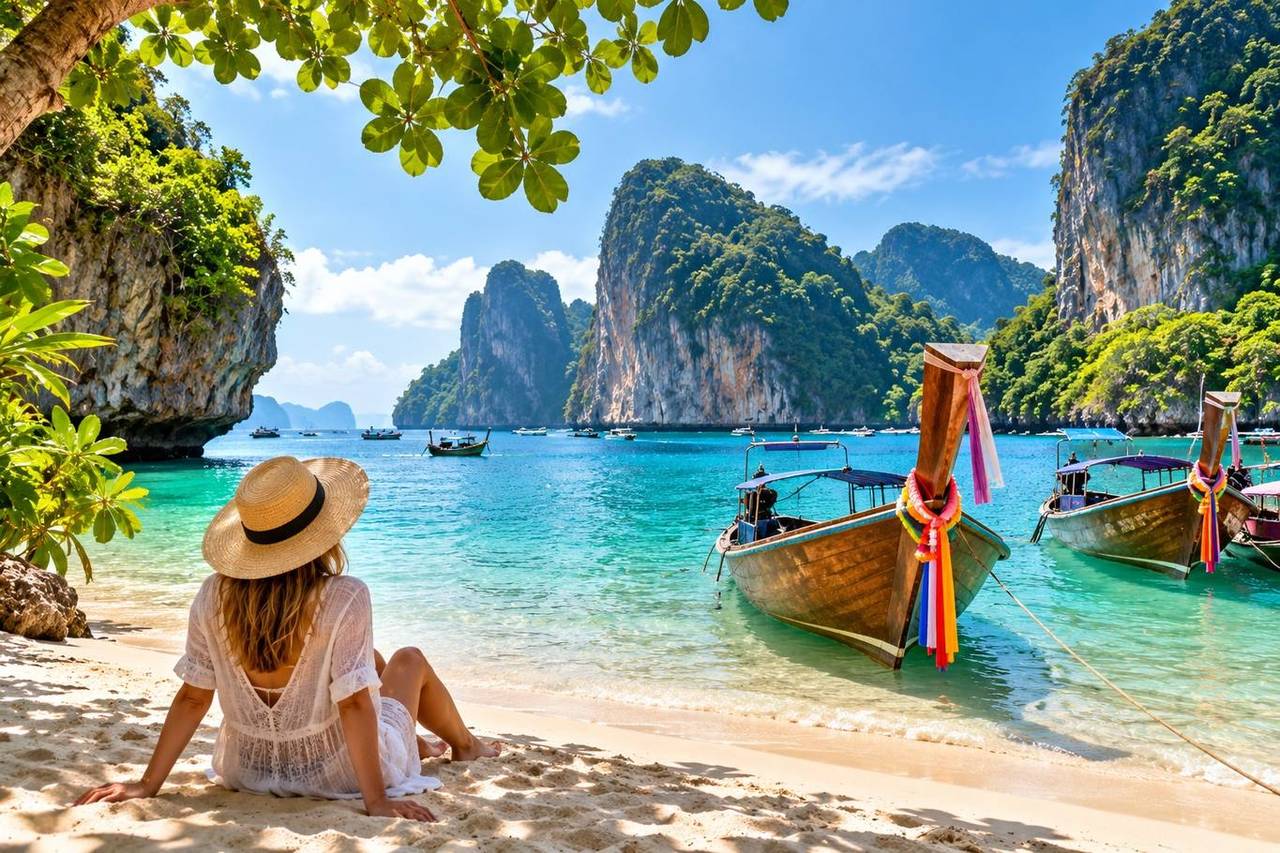
On the Andaman Sea side, Phuket is Thailand's largest island and offers everything from luxury resorts to beach parties. Travellers seeking a quieter atmosphere head to Krabi, Koh Lanta, or Koh Lipe. The Phi Phi Islands are stunningly beautiful, framed by limestone cliffs and turquoise water, and Maya Bay (the filming location of 'The Beach') is open again to a limited number of visitors.
7. Northern Thailand and Chiang Mai
In Northern Thailand, Chiang Mai is a paradise for culture and nature lovers. The city has over 300 Buddhist temples, and the surrounding mountains offer hiking trails and waterfalls. The Doi Suthep temple on the mountaintop is a must-visit. Elephant tourism has faced growing criticism: skip elephant riding and choose an ethical sanctuary such as Elephant Nature Park instead.
8. Practical tips and the best time to go
In Thailand, they drive on the left. Shoes are always removed when entering temples and homes. The head is sacred, and you should never point your feet at anyone. Smile a lot — Thailand is the 'land of smiles' for a reason.
The best time to travel is from November to February during the dry season. April is the hottest month and the time of the Songkran water festival. The monsoon season (May–October) brings rain but also cheaper prices and fewer tourists — note, however, that the Gulf of Thailand islands (Samui, Phangan, Tao) have a different rainy season than the Andaman coast: the Gulf islands are wettest in October–December. Compare Thailand with other destinations using our comparison tool and check the packing list for a tropical destination.
Budget: You can manage well in Thailand on 30–50 euros per day including accommodation, food, and transport. More luxurious travel costs 80–150 euros per day. The currency is the Thai baht, and cash is still common in small places. Calculate your own budget with our travel cost calculator. Travelling to Thailand alone? Read our solo travel guide and remember to get travel insurance.
Written by Matkustelu.fi
Published 1.3.2026 Updated 29.8.2026
The Matkustelu.fi editorial team curates travel information and planning tips. Always verify changing rules, prices and timetables with the original sources.