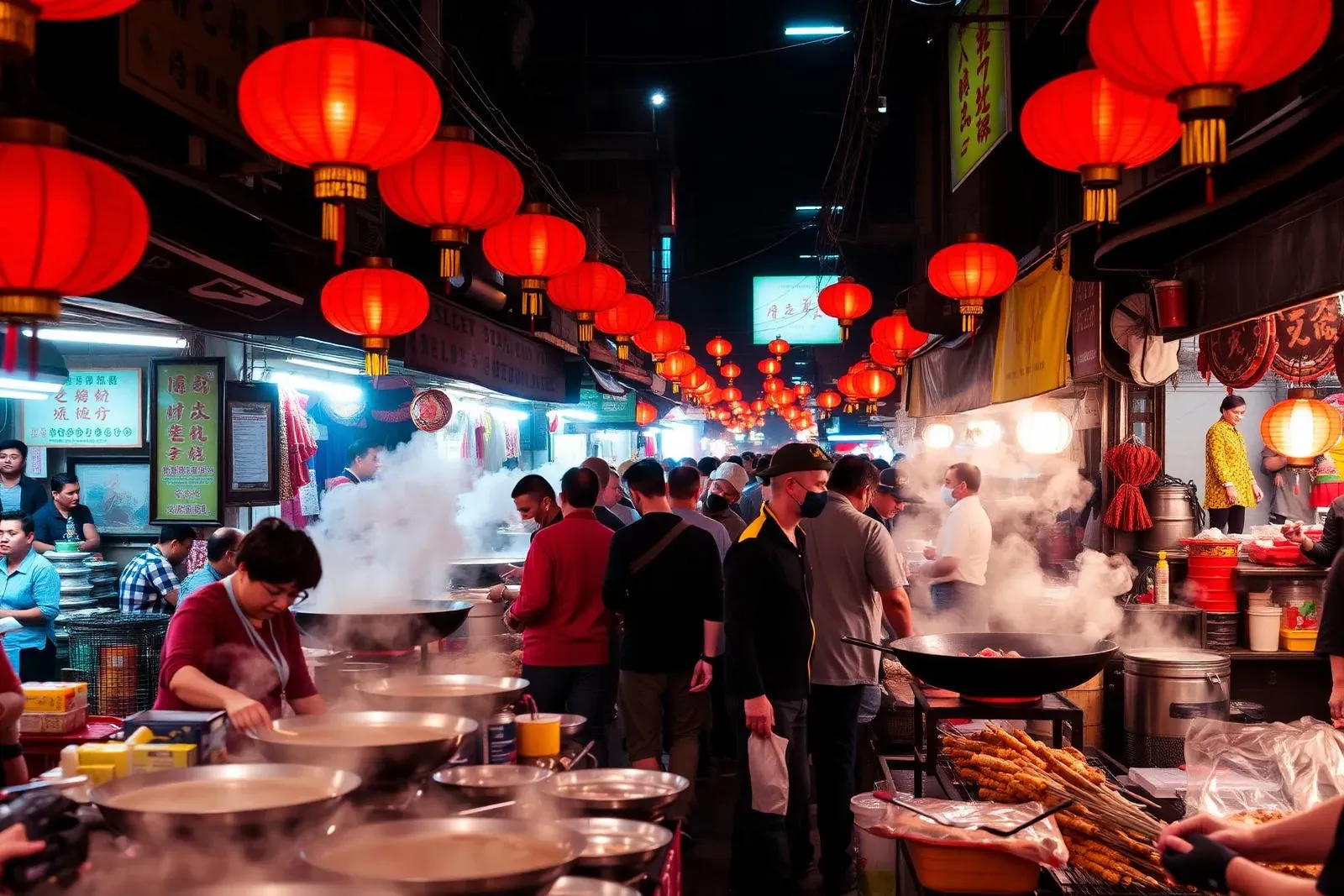
The world's 8 best street food cities: must-try dishes, top stall districts, rules for eating safely and food tour tips.
Street food is real travel. One €2 pad thai from a Bangkok stall tells you more about a place than a five-restaurant tasting menu in the tourist zone. This guide covers the world's 8 best street food cities, what to try in each, when and where to eat, how to order like a local and the rules that keep you out of trouble. For every city you'll find the classic dishes, the best stall areas, price ranges, ideal times and one hot tip.
1. Bangkok, Thailand — the king
Many call Bangkok the world's best street food city, and UNESCO has listed its food culture as heritage. Must-try: pad thai (Thip Samai, the classic since 1966), boat noodles (kuay teow ruea) at Victory Monument, khao man gai (chicken rice) at Pratunam, mango sticky rice (Mae Varee) and tom yum kung anywhere in the evening.
Best areas: Chinatown (Yaowarat) turns into a street-cook kingdom from 6 pm to midnight — don't miss Nai Mong's hoi tod (oyster pancake). Ari and Ekkamai are modern hipster street-food districts. Or Tor Kor is the premium market and Chatuchak (weekends only) is a labyrinth experience. Prices: €1–3 per dish.
Hot tip: Pick a BTS skytrain line and eat one station at a time — each one has its own street-food pockets. See also our Thailand guide.
2. Penang, Malaysia — the fusion city
George Town (UNESCO) combines Chinese, Malay and Indian kitchens in a single block — making it Asia's most diverse street-food city. Must-try: char kway teow (fried rice noodles over charcoal), assam laksa (sour fish soup with tamarind), nasi kandar from the Indian quarter, Hokkien mee (prawn noodle) and cendol (coconut and palm-sugar dessert).
Best areas: Gurney Drive Hawker Centre by the sea, New Lane (Macallum) for lunch and Chulia Street in the evenings. Lebuh Kimberley is the classic hipster version.
Hot tip: At hawker centres you take any table and each stall brings your dish to you — you can eat from five different cooks in one sitting. Prices €1.50–3 per dish.
3. Mexico City, Mexico — taco paradise
Mexico City has over 3,000 food stalls and tacos al pastor was added to UNESCO's intangible cultural heritage list in 2010. Must-try: tacos al pastor (El Huequito or El Califa) from the trompo with pineapple, tlayudas (Oaxacan big tortilla), tamales for breakfast, quesadillas with huitlacoche, elote (grilled corn) and churros at El Moro in the afternoon.
Best areas: Roma Norte and Condesa for modern street food, Mercado de la Merced and Mercado Coyoacán for traditional market experience and the streets of Centro Histórico in the evening. Skip Zona Rosa — prices are 2 × higher.
Hot tip: Taquerías are at their best from 10 pm to 2 am. Order "con todo" (with everything) to get onion, coriander and salsa. 3–5 tacos make a meal and cost €4–6.
4. Istanbul, Türkiye — where East meets West
Istanbul combines Ottoman, Greek and Arab traditions. Must-try: balık ekmek (fish sandwich under the Galata Bridge in Eminönü), simit (sesame bread for breakfast), midye dolma (stuffed mussels with lemon), kumpir (loaded baked potato) in Ortaköy, döner (Bambi or Karadeniz Pidecisi), baklava at Karaköy Güllüoğlu and Turkish coffee from a brass pot.
Best areas: Eminönü and Karaköy in the morning, Beyoğlu and Karaköy in the evening, and Kadıköy on the Asian side for market days — often the locals' choice. €1–4 per dish.
Hot tip: Take the ferry across the Bosphorus to Kadıköy and visit Çiya Sofrası — a museum of Anatolian regional cuisine on a plate. An evening walk under the Galata Bridge eating balık ekmek is one of Europe's best street-food moments.

5. Hanoi, Vietnam — birthplace of pho
Hanoi is a must for pho, banh mi and bun cha lovers. Must-try: pho bo at Pho Gia Truyen (Lò Đúc 49, mornings only 6–10), bun cha at Huong Lien (Bill Clinton ate here with Obama in 2016), banh mi at Banh Mi 25, egg coffee (cafe trung) at Café Giang, cha ca at Cha Ca La Vong and bun bo nam bo on Hang Dien street.
Best areas: The Old Quarter (Hoan Kiem) is the street-food heart — look for tiny plastic chairs on the kerb. Train Street and Beer Street (Ta Hien) are for the evening.
Hot tip: A useful Vietnamese phrase is "không cay" (not spicy). Dishes €1–3. Don't drink the tap water, but ice in a big glass is usually factory-made and safe.
6. Marrakesh, Morocco — Jemaa el-Fnaa theatre
In the evening Jemaa el-Fnaa becomes an outdoor food theatre with a hundred stalls — also on UNESCO's intangible heritage list. Must-try: tagine (chicken with preserved lemon or lamb with prunes), harira soup for iftar, grilled lamb merguez, bessara bean soup for breakfast, and m'semmen breads. Snail soup (babbouche) is a classic for the brave.
Best areas: Jemaa el-Fnaa in the evening (stalls 25, 32, 125 are reliable), the Mellah Jewish quarter food markets and Souk Semmarine for tea and dried fruit.
Hot tip: Pick stalls where Moroccan families are eating — best quality signal. Agree the price up front, and try a Moroccan breakfast on a riad terrace. Read our deeper Morocco guide.
7. Palermo, Italy — Europe's best street food city
Palermo is a rare European city with a street-food culture on par with Asia — Forbes has repeatedly listed it as Europe's best street-food city. Must-try: arancini (stuffed rice balls, ragù or butter), panelle (chickpea fritters in a roll), sfincione (Sicilian pizza with onion and anchovy), pani ca' meusa (spleen sandwich — only for the brave), stigghiola (grilled lamb intestines) and cannoli at Pasticceria Cappello.
Best areas: Vucciria and Ballarò are the classic markets, Mercato del Capo more intimate. Friggitoria Chiluzzo is the legendary panelle spot.
Hot tip: Pair Palermo with Catania, where the street food is equally rich (horse meat, wine and gnocchi). Dishes €2–5.
8. Tokyo, Japan — yatai and izakaya
Tokyo's street food differs from the Asian classics — think tiny stalls, depachika food halls (department-store basements) and yokocho alleys rather than huge markets. Must-try: takoyaki (octopus balls) in Tsukiji, taiyaki (fish-shaped pastries with red bean), yakitori at Memory Lane (Omoide Yokocho) in Shinjuku, gyoza in Asakusa alleys, onigiri from a convenience store (yes, 7-Eleven is part of the culture) and ramen at Ichiran or any hole-in-the-wall.
Best areas: Tsukiji Outer Market in the morning, Ameya-Yokocho (Ueno), Omoide Yokocho (Shinjuku) and Nakamise-dori (Asakusa).
Hot tip: In Japan walking and eating at the same time is considered rude — eat at the stall or sit down. Dishes €3–8.
Markets and night-stall areas — how to spot the best stall
Three signs separate top-tier stalls from average ones: (1) a long queue of locals — the single best signal, because locals know. (2) A short menu — a one- or two-dish stall is usually the master of that specialty. (3) High turnover — an ingredient sold out every hour means fresh stock. Avoid stalls where food has been sitting in a glass case for an hour.
Eating safely — 7 rules
1. Pick the busiest stalls — turnover means fresh ingredients.
2. Make sure it's cooked in front of you — a few minutes on high heat kills most bacteria.
3. Avoid raw meat and shellfish on your first days — let your gut adapt.
4. Bottled water only — ice often comes from the tap (though in Vietnam and Bangkok it's usually factory-made and safe).
5. Wash your hands or use sanitiser before eating.
6. Skip pre-cut fruit that's been sitting out. Fruit you peel yourself (banana, mango, mandarin) is always safe.
7. Probiotics and activated charcoal in the bag — start probiotics a week before travel and keep charcoal tablets within reach for emergencies.
See also our travel health guide and remember travel insurance — bad food poisoning can require hospital treatment.

Drinks — what to order on the street
Street-food cities have drink scenes as rich as their food. Bangkok and Hanoi: Thai iced tea, Vietnamese iced coffee (ca phe sua da) and fresh coconuts. Mexico City: aguas frescas (jamaica, horchata, tamarindo) at €1 a glass. Istanbul: ayran (salty yogurt drink) and salep in winter. Marrakesh: mint tea by the litre for €1. Palermo: spremuta d'arancia fresh orange juice €2.
On alcohol: many Muslim countries don't serve alcohol at street stalls, but Thai Singha beer and Vietnamese Bia Hoi are part of the street-food tradition.
Etiquette, language and payment
Ordering usually works by pointing — don't worry about language. Cash is king: stalls rarely take cards. Carry small notes since change may be scarce. Tipping: generally not expected in Asia, round up in the Middle East, ~10 % when sitting down in Mexico, in Italy the cover charge (coperto) handles it. Etiquette: in Japan don't walk and eat, in Thailand spoon in the right and fork in the left, in Morocco eat with the right hand.
Food tour or DIY?
A food tour is worth it if you're new to the city, don't speak the language, or want a story behind every bite. A good guide takes you to places you wouldn't find, shows you how to order and saves you from scams. Klook food tours in Bangkok, Mexico City, Istanbul and Penang are well reviewed at €30–60 per person — usually 5–8 tasting portions included.
DIY works if you're an experienced traveller. Download Google Translate offline and offline maps of the stall area in advance. Start with one guided tour on day one — after that you'll find your own way.
Allergies and special diets
At home, write your allergies and diet on a card in the local language (or on your lock screen) using Google Translate with local script. Nuts are especially tricky in Asia because peanut oil is everywhere — ask for "mai sai tua" in Thailand or "không có lạc" in Vietnam. Gluten-free: South American and Asian rice-based kitchens are friendlier than Italy. Vegetarian eating is easy in India, Sri Lanka and many Mediterranean countries, but harder in Vietnam and Latin America where fish sauce and pork hide everywhere. For vegans, Tokyo and Bangkok are the easiest Asian metros, and in Morocco a vegetable tagine is always available.
Building your own street-food trip
Combine street food with cheap travel by checking our 10 cheapest destinations 2026 — Vietnam, Morocco and Mexico are both budget-friendly and top food cities. For Europe, see our Interrail guide 2026. For solo travellers, food tours are the best way to meet other travellers — check our solo travel ABC and women's solo travel safety guide.
FAQ
Do you easily get food poisoning from street food? Statistically, tourist restaurants cause more food poisoning than busy street stalls because stalls use fresh ingredients daily. The risk is around 20–30 % for travellers in Southeast Asia regardless — the trick isn't to avoid street food but to choose well.
Cheapest street food city? Hanoi and Bangkok — a filling meal for €2–3. Penang and Marrakesh are close.
Should I book food tours in advance? The most popular (Bangkok, Mexico City, Tokyo) sell out 2–4 weeks ahead in high season.
Europe's best street-food city? Palermo is the clear winner, Istanbul a strong second, Lisbon and Athens are rising.
Is street food safe during pregnancy? Avoid raw shellfish, raw meat, unpasteurised dairy and pre-cut fruit. Freshly cooked hot dishes are usually fine, but discuss with your doctor before travelling.
Great Asian street-food cities outside the list? Singapore (hawker centres), Saigon (Vietnam), Chengdu (China), Yangon (Myanmar) and Manila (Philippines) all deserve a mention.