Written by Matkustelu.fi
Updated 3.11.2026
Some links in this section are affiliate links. We may earn a commission if you book through them, at no extra cost to you.
Rhodes, Crete, Kos, Santorini, Corfu, Zakynthos, Naxos and Paros compared: prices, beaches, island hopping and the best time to travel.
Greece has hundreds of inhabited islands with varied beaches, landscapes and transport options. Compare them by your preferred activities, season and travel style instead of a single ranking.
Crete or Rhodes: which is better?
Choose Crete for a longer holiday with mountains, beaches and historic sights. Rhodes suits a shorter break combining the Old Town, Lindos and beaches. Kos offers beach and cycling holidays, while Naxos combines sandy beaches, villages and island hopping. Consider your accommodation location and local transport options before deciding.
Quick comparison
| Island | Atmosphere | Beaches | Sights | Best for |
|---|---|---|---|---|
| Rhodes | Lively, historic | Varied; check local winds | Old Town, Lindos | First-timers, families |
| Crete | Varied, large | Excellent (Elafonisi, Balos) | Knossos, Samaria Gorge | Drivers, active trips |
| Kos | Easy, flat | Long sandy stretches | Asklepieion, cycle paths | Families, cyclists |
| Santorini | Spectacular, expensive | Modest, black sand | Caldera, Oia | Couples, photographers |
| Corfu | Green, Italian feel | Varied coves | Old Town, Paleokastritsa | First-timers, nature |
| Zakynthos | Relaxed, scenic | Gerakas; Navagio landing closed | Turtles, sea caves | Young travellers, boaters |
| Naxos | Authentic, calm | Long and breezy | Mountain villages, Portara | Families, budget |
| Paros | Trendy, compact | Good and varied | Naoussa, Parikia | Couples, island hopping |
If this is your first trip to Greece, choose Rhodes, Crete or Corfu. They are easy, well served and combine beaches with things to see.
Island groups — start here
The group you choose sets the mood.
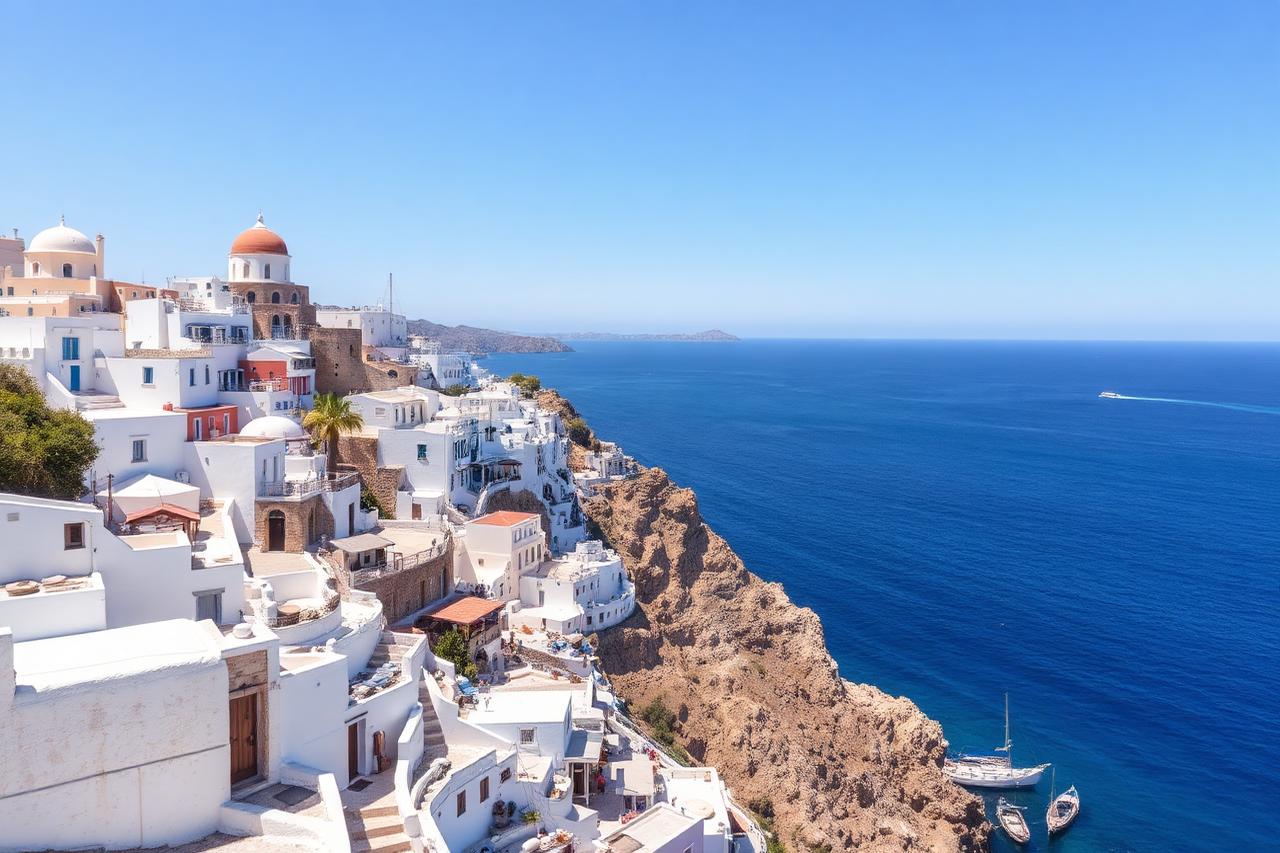
The Cyclades (Santorini, Naxos, Paros, Mykonos, Milos) are the postcard Greece: bright white villages, blue doors, dry landscapes. Also the windiest group, thanks to the summer meltemi.
The Dodecanese (Rhodes, Kos, Karpathos) sit in the south-east near the Turkish coast. Lots of history, good flight links and a long season.
The Ionian islands (Corfu, Zakynthos, Kefalonia, Lefkada) lie in the west, green and Italian-influenced thanks to wetter winters.
Crete is a world of its own: Greece's largest island, with mountains, gorges, cities and hundreds of kilometres of coast.
Best time to travel
| Season | Weather | Best for |
|---|---|---|
| Apr–May | 19–25 °C, sea 18–20 °C | Hiking, city breaks, low prices |
| June | 26–30 °C, sea 22–24 °C | Best mix of warmth and space |
| Jul–Aug | 30–35 °C, sea 25–26 °C | Beach time, but busiest and dearest |
| September | 26–30 °C, sea 25 °C | The sweet spot: warm sea, fewer crowds |
| Oct–Nov | 20–25 °C | Season winds down, many islands close |
June and September suit most travellers. In July and August the meltemi cools the Cyclades but can cancel ferries.
Prices and budget
Prices vary by island, season and booking terms. Compare identical travel dates and accommodation standards instead of relying on an unverified island-wide price ranking.
| Expense | Compare |
|---|---|
| Accommodation | Island, resort, date and cancellation terms |
| Food | Location and daily meal choices |
| Ferries | Route, operator, date and vehicle fees |
| Local transport | Buses, car hire, parking and transfers |
| Total cost | Flights, stays, food, transport and activities |
Santorini and Mykonos can be expensive at peak times, but prices vary within every island. Compare current terms on Booking.com(Affiliate link).
Island hopping and ferries
Island hopping is one of the joys of Greece, but it needs planning.
- Stay within one group. Naxos–Paros–Santorini is an easy Cyclades chain; Rhodes–Symi–Kos works in the Dodecanese.
- Book ferries in advance in July and August. Ferry times and prices vary by route, vessel, stops and season.
- Leave a buffer. Strong wind can cancel a sailing, so never plan a ferry for the morning of your flight home.
- Piraeus in Athens is the main hub, though Rafina is often faster for the nearer Cyclades.
For route-planning ideas, see the Interrail guide.
Beaches, culture or nightlife?
Best beaches: Crete (Elafonisi, Balos), Zakynthos (Gerakas; Navagio landing currently closed), Naxos (Plaka, Agios Prokopios) and Kos. If the beach is your main reason to travel, skip Santorini.
Best culture: the medieval Old Town of Rhodes, Knossos and Chania on Crete, Venetian Corfu Town, and the ancient site of Delos off Mykonos.
Busiest nightlife: Mykonos, Faliraki on Rhodes and Laganas on Zakynthos. For quiet evenings, choose Naxos, Karpathos or Kefalonia.
Hiking and nature: Crete's Samaria Gorge, Mount Zas on Naxos and Mount Ainos on Kefalonia. Take proper shoes and start early — midday is too hot.
Book boat trips and guided tours ahead on Klook(Affiliate link); the popular day cruises fill up in season.
Families, couples and solo travellers
Families do best on Kos, Rhodes and the north coast of Crete: shallow beaches, short transfers and plenty of family hotels.
Couples will like Santorini, Paros, Milos and Kefalonia — small villages, beautiful sunsets and good restaurants.
Solo travellers find Greece easy and safe. Naxos, Paros and Crete have hostels, group tours and decent public transport. See the solo travel guide and the female solo traveller safety guide.
Summer flights from Finland run direct to Rhodes, Crete, Kos and Corfu. Compare fares on Kiwi.com(Affiliate link) and read the timing tips in cheap flights 2026. To weigh Greece against the Atlantic, see the Canary Islands comparison. You can also island-hop by ship — see the cruise guide 2026.
Practical tips
- Two islands per week is plenty. A ferry day eats half a day at both ends.
- Carry cash. Small tavernas and beach bars do not always take cards; compare withdrawal costs in Revolut vs Wise.
- Scooters need the right licence. Greece enforces the A1 requirement, and insurance will not pay without it.
- The sun is fiercest 12–4pm. Do sights in the morning, beach in the afternoon.
- Water: tap water is drinkable on Crete and Rhodes, but bottled is recommended on many small islands.
- Sort data before you fly. EU roaming works, but if your data allowance is small see Airalo(Affiliate link) and the eSIM guide.
FAQ — Greek islands
Which Greek island is best for a first trip? Rhodes or Crete: good flights, wide accommodation choice, beaches and sights in one package.
Which island is cheapest? There is no single cheapest island. Compare dates, accommodation and local transport; Santorini and Mykonos are often expensive at peak times.
When is the sea warmest? August and September, at around 25–26 °C.
Can I combine islands in one week? Yes, if they are in the same group and the ferry takes under two hours. Otherwise spend the week on one island.
Do I need a rental car? A car helps in remote areas of Crete and Naxos but is not necessary for every itinerary. Compare buses and transfers first.
Do I need a visa? Not as an EU citizen. Still check your passport validity in the passport and ETIAS guide.
Written by Matkustelu.fi
Published 18.8.2026 Updated 3.11.2026
The Matkustelu.fi editorial team curates travel information and planning tips. Always verify changing rules, prices and timetables with the original sources.