A comprehensive safety guide for female solo travelers: destination choice, accommodation, dressing, harassment situations, transport, apps and destination-specific tips. Practical and realistic.
Female solo travel is one of the most rewarding ways to see the world — and also one of the most questioned. The vast majority of female solo travelers return home without a single serious incident, but careful preparation makes the trip far more relaxed. This guide covers safety concretely: what to do before leaving, how to choose a destination and accommodation, how to react to harassment, and which tools to keep on your phone. We recommend also reading our complete solo traveler's guide, which covers the basics regardless of gender.
A realistic risk picture — don't be paralysed by statistics
According to recent surveys (JourneyWoman 2024, Solo Female Travelers Network 2025), over 85 % of female solo travelers consider their trips safe, and serious incidents are statistically rarer than at home. The most common problems are theft, taxi scams and verbal harassment — not serious violence. This doesn't mean risks don't exist, but perspective helps: fear shouldn't stop you from going, but preparation is still part of the package.
If you want ready-made safe trip ideas, see our solo travel hub with destination picks, safety ratings and route templates.
Before you leave — a 10-minute checklist
Documents and insurance. Scan your passport, visa, insurance certificate and credit cards. Save copies to cloud storage and send them to one trusted person. Create an emergency contacts PDF, print it, and keep it in an inner pocket of your bag.
Travel insurance. For female solo travelers we recommend insurance that covers medical care (at least €250,000), repatriation, gynaecological emergencies and crisis support for sexual violence. Read our travel insurance guide.
Destination research. Check your foreign ministry's advisories, crime levels on Numbeo and discussions in the Solo Female Travelers Network. Find out in advance which neighbourhoods to avoid at night.
Family check-in schedule. Agree with one person who you'll message every day — a simple 'all ok' is enough. If a message is missed for 24 hours, they know to start investigating.
Emergency numbers and embassy. Save the general emergency number (112 in Europe), a local women's crisis line if available, and your embassy's number. The Finnish foreign ministry's 24/7 emergency line +358 9 1605 5555 works from anywhere in the world.
Choosing a destination — safest options and those needing extra caution
Recommended for beginners: Iceland, Japan, South Korea, Taiwan, Singapore, New Zealand, Norway, Denmark, Portugal, Ireland, Slovenia and Georgia. Female solo travelers can walk in city centres at night without major concern, and harassment is rare.
Popular and safe with the basics in place: Thailand, Vietnam, Indonesia (Bali), Greece, Italy, Spain, Mexico (Yucatán), Costa Rica, Colombia (Medellín) and Morocco on organised routes. Harassment may occur but serious violence is rare — basic caution is enough.
Require extra attention: Egypt, India, rural Morocco, South Africa and some major South American cities. Female travelers do go, but you need to invest more in dressing, accommodation and transport. Consider a group trip for your first time.
Avoid solo if inexperienced: active conflict zones (Syria, Yemen, parts of Afghanistan, South Sudan). Insurance usually won't cover these either.
Compare safety, social and budget levels side by side with our destination comparison tool and explore the regions in more detail in our Europe guide and Asia guide. Budget-friendly but still safe ideas (Albania, Georgia, Portugal) are listed in cheapest destinations 2026.
Accommodation — don't skimp
Accommodation is worth investing in more as a female solo traveler than as a couple. Concrete rules:
- Read reviews written by female travelers. On Booking.com you can filter 'solo traveler' reviews; look for mentions of safety, lighting and friendly reception. Start with a Booking.com hostel search filtered to 8+ rating — change the destination in the 'ss=' field.
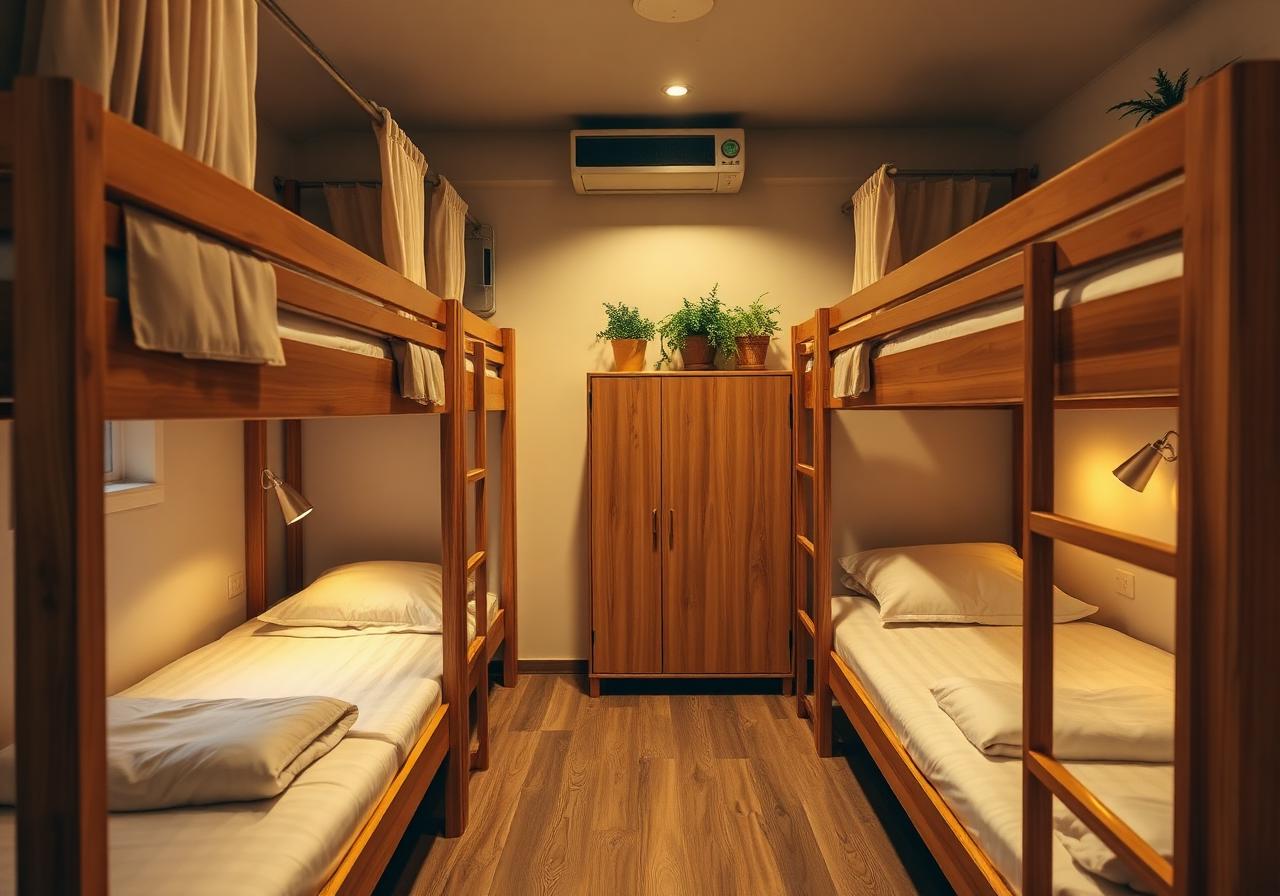
- Prefer female-only dorms in hostels. Most popular Asian and South American hostels have clearly marked 'female only' rooms.
- Avoid ground-floor and isolated corridor rooms. Ask for a room on floors 2–4, close to reception.
- Check the locks. Good accommodation has a working door lock, security chain and window lock. Carry a simple door wedge — an eight-euro wedge prevents the door from being opened from outside and weighs 50 grams.
- Never share your room number out loud. At reception ask for it on a written note.
Get packing right before you leave: use our packing list tool and pick the 'Solo Traveler' preset.
Dressing and blending in
Dressing is not a moral question but a practical tool: respect the local norm and you draw less attention. Pack for the climate but include:
- Long trousers or a long dress and a light scarf for more conservative destinations (Morocco, Egypt, India, the Middle East, many Asian temples).
- A shoulder-covering top for religious sites (Italian churches, Thai temples, Balinese shrines).
- Muted colours — bright western-tourist colours attract attention.
- Avoid big jewellery and expensive-looking watches. A real or vintage engagement ring supports a 'married' cover story if you want to discourage approaches.
The rule: walk like you know where you're going. Open your map app discreetly, not in the middle of the street, and if you get lost, step into a café or hotel to check your location.
Transport — taxis, public transit and moving at night
Airport transfers. Don't take an 'official-looking' taxi at the airport without a booking. Use either pre-booked transfer (GetTransfer), the official taxi desk, or an app (Uber, Bolt, Grab, Didi).
City taxis. Always use an app — Uber, Bolt, Grab (Asia), Didi (Latin America), Careem (Middle East). Avoid hailed taxis especially at night. Check the driver's name and licence plate before boarding, and share the trip with a contact through the app.
Public transport. In many countries (Japan, India, Egypt, Brazil) there are women-only carriages at rush hour — use them. Avoid empty metro carriages at night, pick seats near the driver or conductor.
Moving at night. Rule: if you'd be cautious at home, be twice as cautious abroad. Keep one earbud out, listen to your surroundings. A woman talking (or pretending to talk) on the phone is a less likely target than someone who looks lost.
Harassment and street incidents
Catcalling, unwanted approaches and uncomfortable touching can happen anywhere — including Europe. Good tactics:
- Don't react verbally. Don't smile, don't answer, walk on purposefully.
- If someone follows you, go to a public space. Café, hotel, shop, a neighbour's yard. Don't head straight to your accommodation.
- 'No' in the local language. Learn the basics: La (Arabic), Nahi (Hindi), Nein (German), Iie (Japanese), Bù yào (Mandarin). A clear firm voice works better than a pleading tone.
- If touching happens (e.g. crowded transit), shout loudly in the local language 'stop!' or a hard 'NO!' — in most cultures peer pressure pushes the harasser away.
- Use a safety app. bSafe and Noonlight send your location and an audio recording to a contact with one button press.
If you become the victim of a serious crime, contact the Finnish embassy (emergency +358 9 1605 5555) and local police. Keep the crime report receipt — insurance almost always requires it.
Health — gynaecological preparation
Women's health issues are often left out of travel advice. Pack:
- Enough contraception for the whole trip plus a 2-week buffer.
- Tampons / menstrual cup. Tampons are rare in much of South America, Asia and Africa. A menstrual cup is the best travel option.
- UTI medication. Ask your doctor for a backup prescription (e.g. trimethoprim) — a urinary tract infection is the most common reason to cut a trip short.
- Yeast infection treatment (e.g. fluconazole capsule) — long flights and a changing climate often trigger one.
- Emergency contraception. Bring a 72-hour pill — availability varies by country.
Also read our health on the road guide for general vaccinations and travel medicine.
Apps and tools
- Location sharing: WhatsApp Live Location, Google Maps Location Sharing, Life360.
- Panic button: bSafe, Noonlight, a personal safety alarm (e.g. She's Birdie €25).
- EU emergency number: 112 works across the EU, even without a SIM.
- VPN: Public Wi-Fi is a security risk — use NordVPN or similar.
- eSIM right after landing: Airalo works before you queue for a local SIM — location sharing works from minute one.
- Women's travel communities: Solo Female Travelers Network and Host a Sister (Facebook) — local women help in emergencies in many destinations.
A broader app round-up is in our best travel apps 2026 guide, and if you're planning a longer trip, see the digital nomad guide.
Destination-specific tips
Europe: Generally safe. Beware of pickpockets in Rome, Barcelona and Paris — use a front pocket or a money belt worn under your clothes. The night metro is safe in the Nordics, but avoid it in Paris late at night.
Southeast Asia: Friendly to female solo travelers. Dress more conservatively at temples. Watch out for spiked drinks at Koh Phangan's Full Moon Party — keep your drink in your hand at all times.
India: Book your airport transfer in advance. Avoid hailed taxis when alone. Use women-only train carriages. Dress modestly (long dress + scarf). Don't drink alcohol with strangers.
Morocco: Marrakesh's medina is safe by day — choose a riad near Jemaa el-Fnaa. Visit the Sahara only on organised tours. CTM and Supratours buses are safe for city-to-city travel.
South America: Don't flash your phone in big cities (Bogotá, Lima, Buenos Aires). Use Uber. In Colombia, never leave a bar with strangers — 'devil's breath' (scopolamine) is a real threat.
Egypt & Middle East: Choose an organised tour or stay in well-rated hotels, at least for your first trip. Dress conservatively. Don't travel alone late at night.
FAQ
Is it safe to travel abroad alone as a woman? Yes — over 85 % of female solo travelers experience no serious incident. Risks are mostly the same as at home: theft and harassment. Serious violence is statistically rare.
What is the safest country for a female solo traveler? Iceland, Japan, South Korea, Singapore and the Nordics consistently lead the rankings.
Should I pretend to be married? In some cultures (India, rural Morocco, Egypt) a 'husband story' reduces unwanted approaches. A real or vintage engagement ring helps.
Can I travel India alone as a woman? Yes, but for a first trip pick Kerala or Rajasthan with arranged transfers, avoid rural Northern India at night, and book transport in advance.
What if I become a crime victim abroad? Call the Finnish embassy emergency line +358 9 1605 5555 immediately. File a local police report, keep the receipt, contact your insurer. You can get legal support and crisis help.
Do I need a separate insurance for female solo travel? Not separately, but make sure your travel insurance covers gynaecological emergencies, crisis support and repatriation. Read our travel insurance guide.
Also read: Complete Solo Traveler's Guide, Health on the road and Travel insurance guide. Print the emergency contacts PDF before leaving.